Lily Sawyer is an in-house writer for Manufacturing Outlook Magazine, where she is responsible for interviewing corporate executives and crafting original features for the magazine, corporate...
- Senior Editor
Share
Tesco is urging industry collaboration to scale low-carbon fertilisers and agri-tech innovation, aiming to strengthen UK food security, support farmers’ resilience, and reduce emissions amid supply chain volatility.
Tesco is calling for deeper collaboration across the food system, bringing together retailers, farmers, and innovators to accelerate the adoption of agricultural technologies that can strengthen resilience in UK farming.
The retailer argues that scaling innovation is now essential to protect British farmers from future supply shocks, while also reinforcing long-term food security and improving on-farm stability.
Speaking at London Tech Week earlier this month, Tesco UK CEO Ashwin Prasad is set to highlight both the potential of emerging farm technologies and the structural barriers that continue to limit their uptake, including access to funding and consistent supply availability.
“We want to share what we have learned from our work so far on projects such as our low carbon concept farm, and help shape the conditions needed for wider adoption. That’s also why we’re pleased to be running the Tesco Agri-tech Challenge, to help find the promising innovations that will help shield farmers from the supply chain shocks of tomorrow”
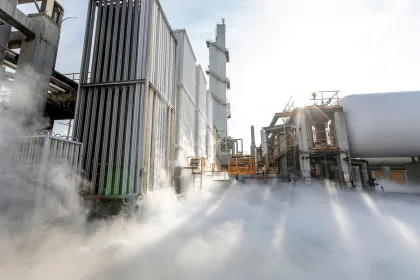
A central focus of Tesco’s approach is the development and scaling of UK-produced, low-carbon fertilisers. These products are positioned as a lower-emission, more domestically stable alternative to conventional fertilisers, which have been affected by global supply chain disruption and rising prices.
Recent conditions have narrowed the price gap between low-carbon and traditional fertilisers, strengthening the case for wider adoption, particularly as farmers seek more predictable input costs.
TRIALS DEMONSTRATE COMMERCIAL VIABILITY
Trials conducted on Tesco’s Low Carbon Concept Farm in Lincolnshire have demonstrated significant environmental benefits without compromising productivity.
Working with supplier Branston, the initiative recorded a more than 50 percent reduction in carbon emissions in potato production, while maintaining both yield and quality. The resulting 500 tonnes of potatoes were subsequently sold in Tesco stores.
The results suggest that low-carbon growing techniques, including approaches that lock in CO₂ during production, can deliver measurable sustainability gains at commercial scale.
ADDRESSING SUPPLY CHAIN PRESSURES
Despite promising results, adoption remains constrained by structural challenges. Farmers continue to cite limited availability of low-carbon fertilisers and difficulties accessing funding for on-farm trials as key barriers.
Tesco has emphasised that while these innovations can deliver comparable yields and reduced environmental impact, their long-term value depends on consistent supply, clear pricing structures, and greater confidence for farmers to plan ahead.
These issues are becoming more urgent as global fertiliser markets face ongoing disruption, contributing to volatility and uncertainty across the sector.
TESCO AGRI-TECH CHALLENGE TO SCALE INNOVATION
To accelerate progress, Tesco has relaunched its global innovation programme, the Tesco Agri-tech Challenge. The initiative seeks to identify start-ups and innovators developing practical solutions that can improve sustainability, productivity, and resilience in farming.
Successful applicants will gain the opportunity to collaborate with Tesco and supplier partners, including access to real farm trials, as well as a year’s membership with Agri-TechE.
Applications for the programme remain open until 3 July, with a focus on moving technologies from pilot stage into real-world agricultural deployment.
FROM PILOTS TO MAINSTREAM ADOPTION
Tesco’s wider ambition is to move promising innovations beyond isolated trials and into mainstream agricultural use. The retailer argues that scaling technologies such as low-carbon fertilisers will be critical not only for reducing emissions, but also for strengthening the UK’s long-term food security and economic resilience.
By combining industry collaboration, targeted investment, and on-farm testing, Tesco is positioning innovation as a central pillar in the future of British agriculture
This article was produced by the editorial team at Manufacturing Outlook and published as part of the Outlook Publishing global network of B2B industry magazines.
Outlook Publishing delivers industry insights, company stories, and sector coverage across manufacturing, mining, construction, healthcare, supply chains, food production, and sustainability.
Manufacturing Outlook provides ongoing coverage of organisations and developments shaping the global manufacturing industry.
Lily Sawyer is an in-house writer for Manufacturing Outlook Magazine, where she is responsible for interviewing corporate executives and crafting original features for the magazine, corporate brochures, and the digital platform.