




EXCELLENCE IN BUILDING ENVELOPES
This raises the bar for performance and opens up many opportunities for companies that are willing to adapt, differentiate, and respond quickly to customer needs.
“Every project, market, and customer brings new challenges, but there is also a chance to create meaningful, future-focused solutions. It’s a space where innovation and customer-centric thinking can truly make a difference,” adds Janez Kunič, CCO.
These conditions provide the perfect environment for companies to differentiate, build long-term partnerships, and shape how buildings will perform over the next 30 to 40 years.
IN PRIME POSITION
With more than 450 employees, production facilities in Slovenia and Serbia, and a strong sales network across nearly 30 countries, the company works closely with architects, investors, and contractors worldwide.
Moreover, Trimo’s project portfolio includes collaborations with highly reputable organisations such as Airbus, Heathrow Airport, Nestlé, Philips, DHL, Porsche, IKEA, Prologis, Mercedes-Benz, and Coca-Cola.
This demonstrates the trust placed in Trimo’s products and the value it brings to complex architectural and industrial projects.
“Our solutions are mainly used in high-tech industries, data centres, and logistics, where customers need reliable fire performance, strong energy efficiency, and architectural quality in often complex, multi-country operations,” insights Tawile.
Together with REX Panels & Profiles (REX), Trimo is proud to represent the Insulated Panels division within Recticel Group (Recticel) – a Belgian organisation focused on advanced thermal and acoustic insulation solutions and supporting the energy transition.
Indeed, being part of Recticel greatly expands Trimo’s network, granting access to new customers and partnerships and strengthening its credibility in key markets.
“We combine our façade expertise with Recticel’s strong background in materials and innovation, creating solutions that are more competitive and aligned with future market needs. This connection helps us offer greater value to our customers and strengthens Trimo’s position across all our regions,” Kunič expands.
Being part of the group also greatly advances the company’s investment capabilities.
“Within the Insulated Panels division, Trimo, together with REX, benefits from the financial strength and insulation know-how to fund new capacity, technologies, and product development.
“A clear example is the new insulated panels factory being built in the US under the Recticel umbrella. It’s a major investment that will anchor the group’s presence in the country and support our growth ambitions in the wider North American market,” Tawile reveals.
UPHOLDING A COMPETITIVE EDGE
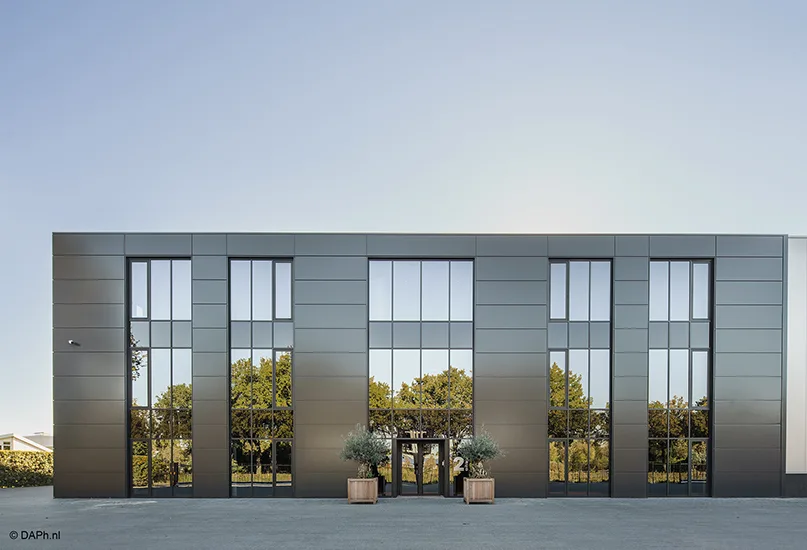
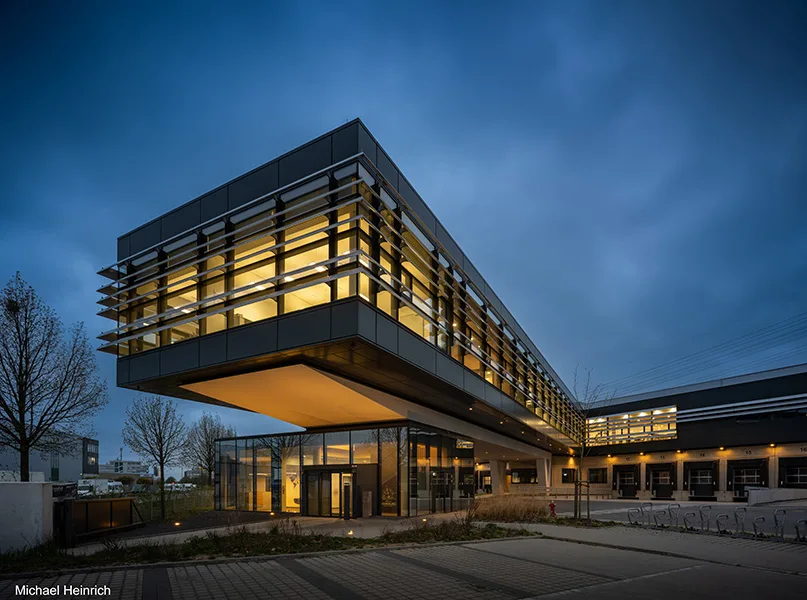
Trimo strives to go above and beyond with its vast range of products, most acutely emphasised by its flagship fire-resistant panel range, Trimoterm – known for its top-notch performance.
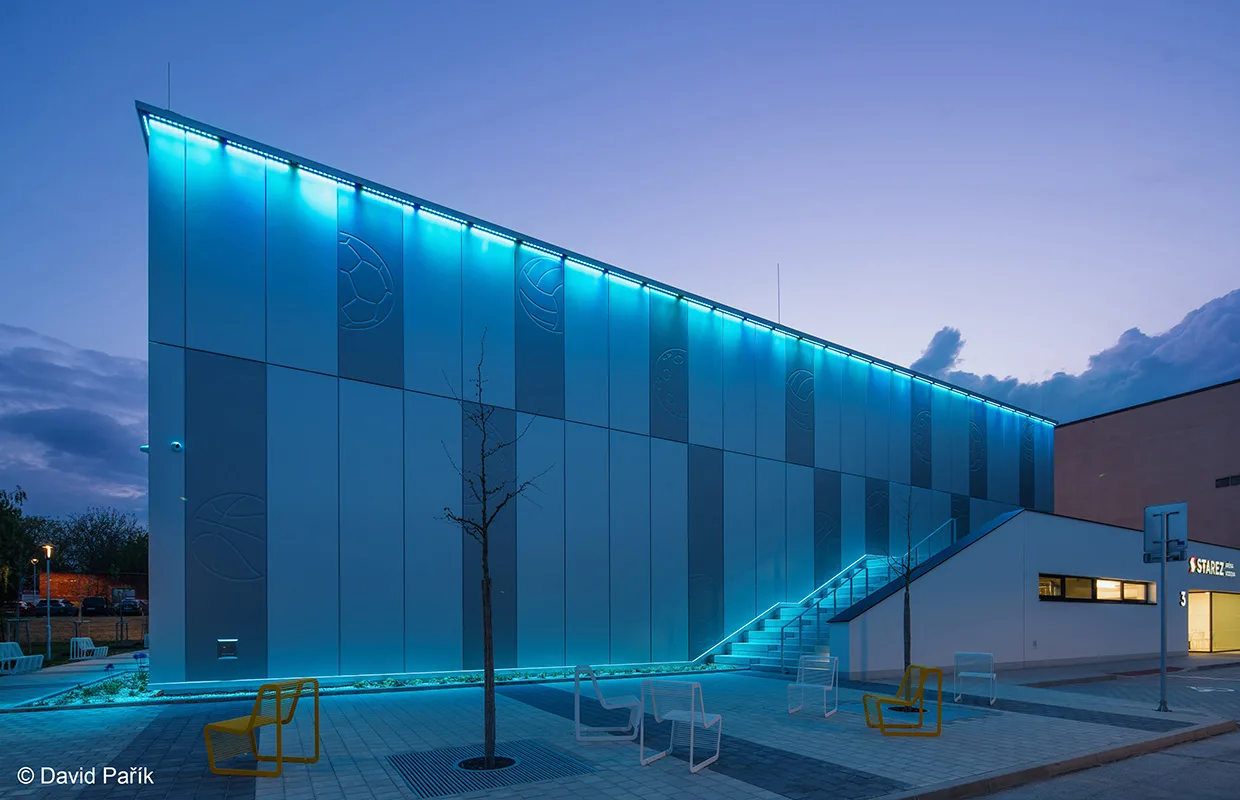
Qbiss One, meanwhile, offers architects a clean, precise, and highly flexible façade solution.
“In recent years, we’ve taken this even further by developing Qbiss Notch in collaboration with Pininfarina, bringing a new level of architectural refinement and design sophistication to the market,” Kunič informs.
The company’s customers value the fact its systems are fully engineered, meaning they address several critical requirements simultaneously, including fire safety, thermal efficiency, airtightness, and design.
“I often say we ‘produce unicorns’; we don’t just make panels – we deliver complete building envelopes with design and engineering support throughout the project.
“Customers rely on us to solve details, interfaces, and compliance questions, not just supply materials,” Tawile tells us.
Indeed, Trimo is renowned for the support it provides to customers throughout their project lifecycles.
“We stay engaged from the early planning stages all the way to installation, offering technical guidance and responsive cooperation. This combination of advanced technology, reliability, and close partnership is why Trimo remains a preferred choice across Europe,” Kunič attests.
The company’s expanding presence across four regions is an additional strategic advantage as it allows Trimo to remain in close proximity to customers and truly understand what drives each market, whether it’s premium design, energy efficiency, delivery speed, or overall project value.
“Each market operates at a different pace and with different expectations – from highly sustainability-driven Northern Europe to fast-moving, design-focused Western and Southern Europe markets and more cost-sensitive but rapidly growing regions in Central and Eastern Europe,” Tawile explains.
This diversity keeps Trimo highly adaptive and challenges the company to innovate with intention, ensuring its solutions meet a wide spectrum of technical, regulatory, and aesthetic needs.
“Our presence provides a clear competitive advantage as we can identify trends early, address regional requirements, and transfer best practices across our markets,” Kunič adds.
“We stay engaged from the early planning stages all the way to installation, offering technical guidance and responsive cooperation. This combination of advanced technology, reliability, and close partnership is why Trimo remains a preferred choice across Europe”
Janez Kunič, CCO, Trimo
A DIVERSE PORTFOLIO
At the pinnacle of its leading building envelope solutions, data centres remain one of the strongest representations of Trimo’s technical expertise and delivery performance.
“Our work with global clients such as Google and Microsoft, as well as hyperscale projects like the Stargate UAE programme, confirms we can meet demanding specifications, coordinate large teams, and ensure reliable execution,” Kunič shares.
Trimo has several other recent projects that demonstrate the diversity of its portfolio. For instance, the company’s involvement with LEGO in the US and the Natural History Museum in the UK highlights its ability to support cultural and complex projects whilst also being compliant with the latest environmental guidelines.
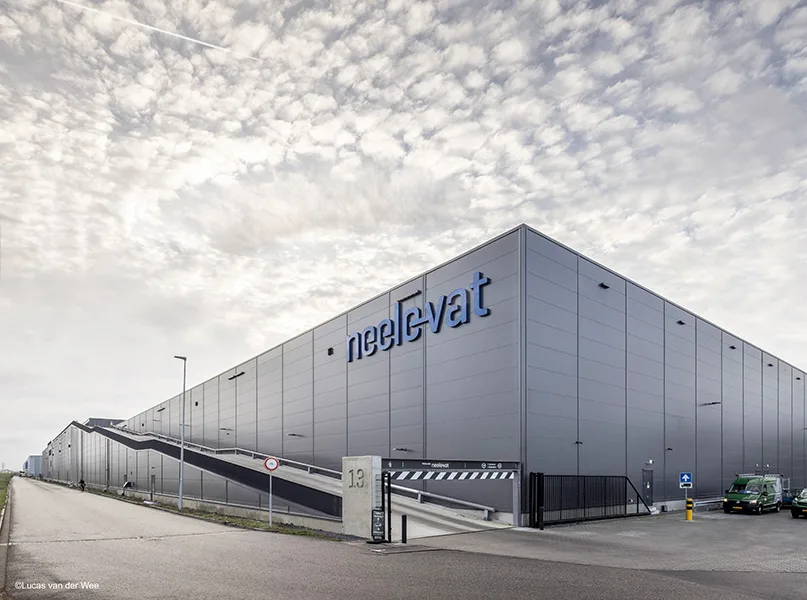
Meanwhile, the company’s work with industrial clients worldwide showcases the durability, efficiency, and precision of its façade systems in demanding production environments.
“These projects highlight the breadth of our portfolio and trust customers place in Trimo,” details Kunič.
Alongside its industrial investments, the company is also working hard on improving operational excellence at its existing sites, with a number of product and process innovations in the pipeline.
DEEPLY SUSTAINABLE
Trimo lives and breathes its focus on sustainable architecture and design, with a strong commitment to reach net zero greenhouse gas (GHG) emissions by 2050.
This is supported by ambitious interim targets for 2030 which centre around significant reductions in its direct (Scope 1 and 2) and indirect (Scope 3) emissions.
Such targets guide the company’s product development strategy and its decision-making around materials and design.
Qbiss One NEXT and Trimoterm NEXT – Trimo’s latest innovations in sustainable construction – are concrete evidence of its environmental approach.
Both achieve up to 69 percent lower carbon footprints compared to the standard Qbiss One and Trimoterm panels whilst maintaining the same performance expected of its façades and roofs.
More broadly, Trimo’s use of stone wool cores is an important part of its sustainability approach as it offers robust fire safety, strong thermal performance, and long service life, which help reduce customers’ environmental impact over the full lifecycle of their building envelopes.
This also means architects and developers don’t have to choose between design quality and green performance as Trimo’s façade systems support distinctive architecture and help move projects closer to their climate and sustainability objectives.
The company applies this same logic to its own internal processes.
“Sustainability starts with responsibility in our own operations. We want to be a company that leads by example not only through our products, but also in the way we work every day.
“That means continuously improving how we manage resources, reducing our environmental footprint, and making choices that reflect our long-term commitment to a greener future,” Kunič impassions.
For example, Trimo’s internal logistics fleet, comprising forklifts and on-site transport, is already fully electric, whilst more than half of the company’s cars and delivery vehicles run on electric or hybrid power, with the aim to eventually have a 100-percent electric fleet.
Trimo additionally generates its own electricity through an on-site solar power plant at its main production site, directly reducing its operational emissions.
“Resource efficiency is another concrete focus – our production generates less than one percent residual waste. Therefore, topics like energy use, emissions, and waste are tracked with the same discipline as safety and quality in our regular management reviews.
“In short, sustainability is not a separate programme – it is part of our day-to-day operational decisions,” Tawile affirms.
“In short, sustainability is not a separate programme – IT is part of our day-to-day operational decisions”
Nay Tawile, CEO, Trimo
TREATING PEOPLE RESPONSIBLY
Trimo’s success in the building façade space is built upon the professionalism and unwavering dedication of its people.
“Over the years, I’ve seen how their professionalism and commitment directly shape the trust our clients place in us. I empower them by removing obstacles, aligning teams around shared priorities, and ensuring they have the information and support they need to act confidently,” Kunič reflects.
Tawile echoes this belief in enabling staff to perform at their best by giving them clarity on priorities, cutting unnecessary bureaucracy, and pushing decisions as close as possible to the teams.
“I want people to feel they have the trust and space to act, not just follow procedures,” he elaborates.
Recognition is a cornerstone of this as each employee’s contributions are made visible across the company, whether it’s strong teamwork on a complex project, a smart improvement on the shop floor, or someone taking ownership in a difficult situation.
“The goal is a culture where colleagues feel empowered, accountable, and proud of the impact they have on our results and reputation,” Tawile prides.
Trimo likewise supports staff development through training and internal mobility, as well as providing direct feedback, clear expectations, and listening to people’s ideas.
Beyond upskilling and development, the company also pays close attention to the day-to-day well-being of its employees.
Case in point, Trimo regularly improves working conditions by installing extra air coolers and cooling stations for staff in the summer and providing healthy, well-balanced hot meals to all employees every day.
A YEAR OF CONSOLIDATION AND EXPANSION
In 2026, Trimo’s utmost priority is to reinforce its leadership in core European markets, with a particular focus on the fast-growing data centre segment alongside high-tech industry and logistics projects.
“The dynamic expansion of data centres offers substantial potential for Trimo, and our solutions and services are already widely recognised and trusted by professionals in this field,” Tawile sets out.
So much so, the company is considered a reference point for premium stone wool core sandwich panels.
However, Trimo’s ambition is to further strengthen this position, stay ahead of competitors, and capture additional growth in overseas markets such as the Middle East and Southeast Asia.
The company’s other area of focus is growth in North America, achieved by building the right partnerships, aligning with local requirements, and advantageously positioning itself to support global customers consistently on both sides of the Atlantic Ocean.
“The third priority is operational excellence – improving productivity, reliability, lead times, and service across our sites whilst simplifying the way we work. This will empower our teams so that more decisions are taken closer to the customer and production line,” Tawile concludes.
TRIMO PARTNER