



Committed to revolutionising the textile industry, EverDye’s CEO, Philippe Berlan, shares how the company’s innovative technology not only reduces environmental harm but also ensures vibrant, sustainable colours for the fashion world.
STITCHING SUSTAINABILITY INTO EVERY HUE
Textile dyeing is a practice that dates back to Neolithic times; however, it is increasingly having a negative impact on the environment.
Originally, dyes were derived from natural sources such as plants, minerals, and insects and, over the centuries, ancient civilisations developed complex techniques to create vivid hues, with specific colours such as Tyrian purple reserved for the wealthy.
During the Middle Ages, craft guilds specialising in dyeing formed and techniques remained predominantly natural until the accidental discovery of the synthetic dye mauveine in the 1850s, which led to the creation of the colour mauve.
This breakthrough revolutionised mass textile production by providing affordable and consistent colours during the Industrial Revolution.
Today, the manufacturing industry has a more balanced approach and is constantly innovating sustainable methods with new techniques.
One such company making strides to meet environmental and aesthetic demands is EverDye – a green chemistry business based in France, which is making a significant impact.
“One of the most polluting steps in fashion production is textile dyeing, that’s why we’re revolutionising the industry,” proudly introduces Philippe Berlan, CEO.
“Our patent technology is bio-based and low-temperature, designed to work with existing machinery, so manufacturers can immediately reduce their environmental impact without replacing infrastructure.”
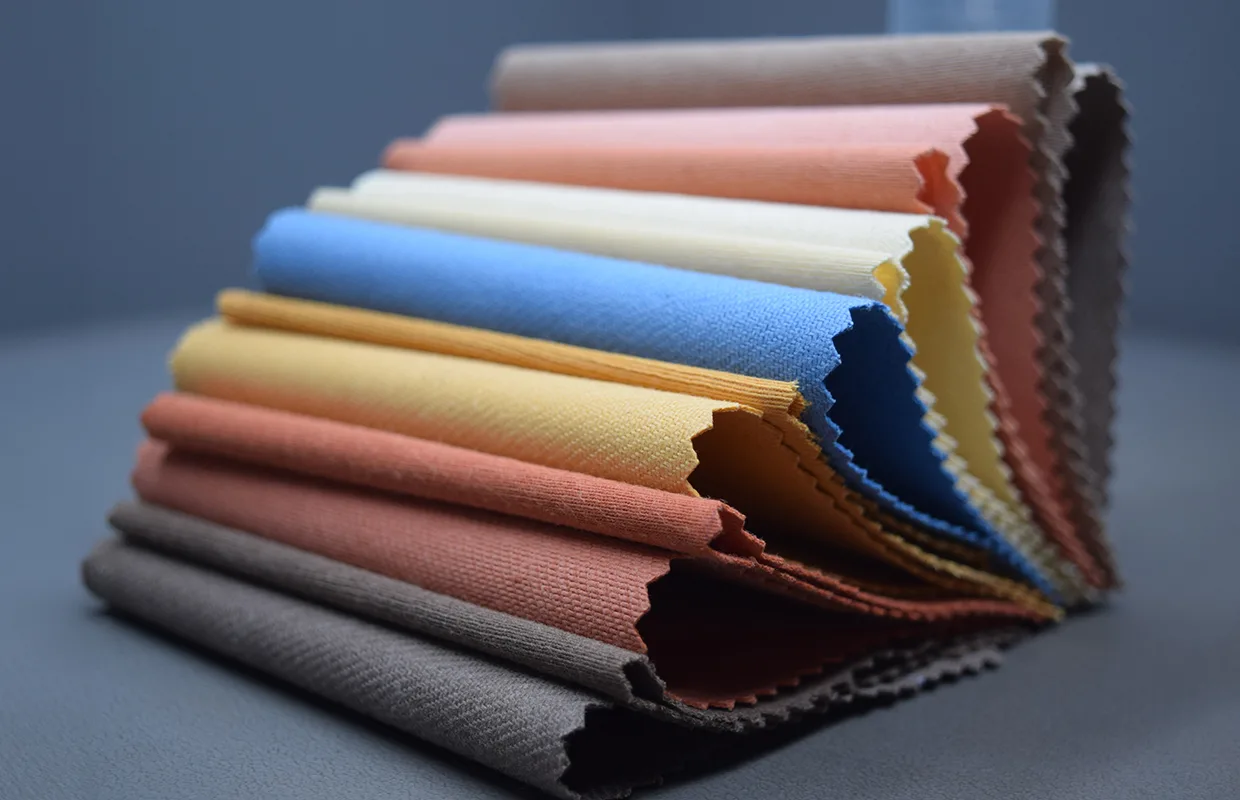
EverDye’s pioneering sustainable dyeing solutions are transforming the industry by eliminating reliance on water and harmful traditional chemicals whilst maintaining vibrant, durable colours comparable to those of conventional methods.
This game-changing approach not only prioritises environmental stewardship but also harkens back to a time when both organic and inorganic elements were harmoniously integrated into the dyeing process.
“Compatibility is what makes EverDye scalable today; it enables brands and suppliers to adopt sustainable dyeing practices with minimal disruption, cutting energy use, emissions, and water pollution whilst maintaining the same colour quality and production speed,” Berlan states.
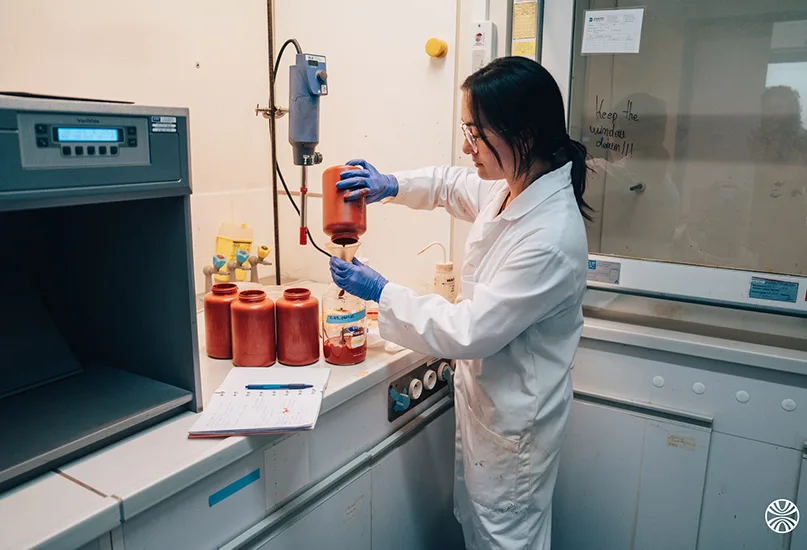
AN ENVIRONMENTAL IMPACT
The textile industry is one of the most polluting sectors in the world, responsible for eight to ten percent of global emissions, half of which is a result of inefficient dyeing processes.
Additionally, it is the second-largest contributor to water pollution, generating 20 percent of the world’s wastewater. The positive news is that EverDye is taking action to change this.
Current dyeing processes produce effluents laden with synthetic dyes, pigments, chemicals, and additives – all of which have devastating effects on wildlife, plants, and human health.
These toxic substances are often discharged into ditches, streams, and rivers, leading to alarming pollution levels, particularly in the discoloured waters surrounding production facilities.
Furthermore, this process is highly energy-intensive, requiring significant fossil fuel combustion to operate efficiently, which contributes to heavy carbon emissions.
Therefore, it is crucial for the textile industry to address these challenges, adopt more sustainable practices, and invest in innovative technologies that minimise environmental impact.
EverDye is indeed leading the way by developing eco-friendly dyeing methods that reduce pollution and conserve resources.
By prioritising sustainability and responsible manufacturing, the industry can work towards a cleaner future, significantly lowering its carbon footprint and safeguarding both ecosystems and public health for generations to come.
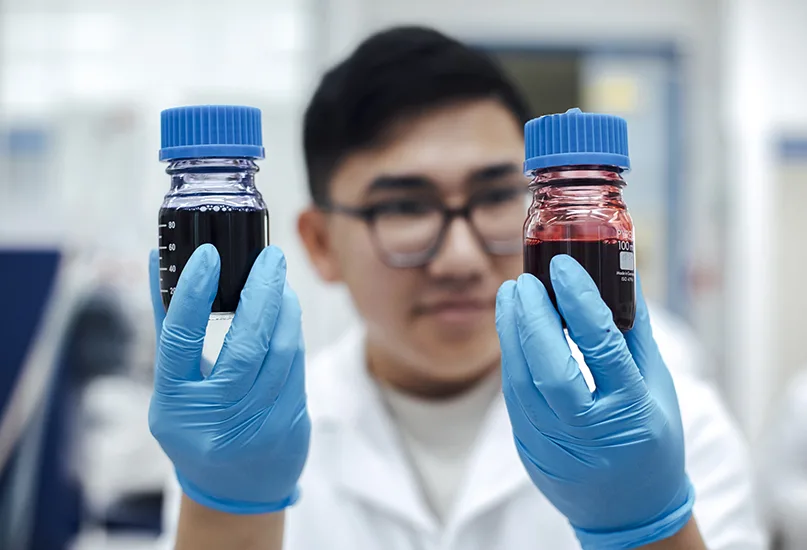
BLENDING SUSTAINABILITY WITH INNOVATION
EverDye’s innovative, patented dyeing technology features distinct design elements that highlight its industry leadership and attract investment, making it a leader in environmentally conscious practices.
The low-temperature dyeing process not only conserves energy but also clearly demonstrates its environmental benefits by enhancing overall efficiency, resulting in exceptional quality whilst minimising impact.
“Our technology combines bio-based chemistry with low-temperature application, significantly reducing energy consumption and greenhouse gas emissions.
“Because it operates effectively at lower temperatures, the process requires less energy, shortens dyeing cycles, and uses less water, all whilst maintaining the same durability and colour intensity. These improvements result in more efficient manufacturing and a significant reduction in carbon footprint,” Berlan passionately explains.
In addition, the company has put in place comprehensive measures to diligently monitor and transparently report on its achievements in reducing emissions and water consumption, reflecting a commitment to accountability and sustainability.
“We are currently implementing a robust measurement and reporting framework that combines industrial trial data with life-cycle assessment (LCA) methodologies,” he reveals.
“These evaluations quantify reductions in carbon emissions, water use, and energy demand compared to conventional dyeing.
“We work transparently with partners to ensure data is traceable and scientifically validated, supporting both environmental, social, and governance (ESG) reporting and ecolabel certification.”

“Our technology combines bio-based chemistry with low-temperature application, significantly reducing energy consumption and greenhouse gas emissions”
Philippe Berlan, CEO, EverDye
TRANSPARENTLY TRANSFORMING TEXTILES
Consumer demand significantly influences the business strategies of the textile industry, as awareness of environmental and ethical issues shapes purchasing decisions.
A growing requirement for sustainable fabrics indicates that newer generations of consumers are prioritising brands that align with their values, leading to a market shift towards eco-friendly materials.
“Consumer expectations for transparency and sustainability are pushing the entire fashion ecosystem to evolve. Our technology directly supports brands’ ability to meet this demand with measurable impact – not just promises.
“By helping manufacturers drastically reduce their carbon and water footprints, we allow brands to meet consumer and regulatory pressures simultaneously. In short, EverDye exists to make it easier for brands to turn consumer awareness into concrete action,” Berlan declares.
Building meaningful relationships with brands and manufacturers is crucial for fostering EverDye’s shift towards more sustainable dyeing practices.
This collaborative engagement can inspire innovation and drive the industry towards greener alternatives, ultimately leading to a more eco-conscious approach to fabric production.
“We collaborate directly with textile manufacturers and fashion brands to conduct industrial trials demonstrating real-world performance and impact,” he reports.
“By providing measurable data on emission reduction, energy savings, and water efficiency, we turn sustainability from an abstract concept into a practical business case. Once a partner sees the results, adoption follows naturally – because our solution delivers both environmental and economic gains.”
“Our role is to bridge science and industry, proving that sustainability and performance can coexist and the transition can happen now”
Philippe Berlan, CEO, EverDye

A CLEANER, GREENER FUTURE
To address environmental challenges, clean technology (Cleantech) is crucial in the fight against climate change.
Investors view EverDye as a disruptive force in Cleantech due to its potential for scientific innovation, which is driving systemic change within the industry.
“EverDye is where science meets scalability. Investors recognise that our patented chemistry addresses fashion’s ‘dirtiest secret’ – dyeing – through a solution that’s both scientifically sound and industrially viable.
“Our innovation replaces fossil-based, high-temperature dyeing with a bio-based, low-energy process, making decarbonisation of the textile industry a reality today. It’s a rare example of Cleantech that can immediately plug into existing supply chains and deliver measurable results at scale,” Berlan enthuses.
A recent €15 million investment round positions EverDye favourably relative to other companies in the sustainable fashion space and is one of the largest investments in European clean chemistry for textiles, positioning the company as a frontrunner in industrial sustainability.
“Whilst many solutions remain at the pilot stage, we are moving into industrial implementation, expanding our laboratory network, and accelerating partnerships with major brands and manufacturers. It’s not just about innovation – it’s about deployment,” he explains.
A significant challenge in scaling technology for broad industry adoption lies in navigating diverse needs and compatibility requirements across sectors, as each industry has unique characteristics, workflows, and standards.
This makes it essential to tailor solutions that not only meet specific demands but also seamlessly integrate with existing systems.
However, this complexity can hinder widespread implementation and necessitates a thoughtful approach to ensure innovations are both practical and universally applicable.
“The biggest challenge is not technical – it’s cultural and systemic. The textile industry has relied on the same processes for decades, so change requires both proof and trust.
“Our role is to bridge science and industry, proving that sustainability and performance can coexist and the transition can happen now.
“With growing regulatory pressure and investor backing, we’re confident that this shift is not only necessary but inevitable,” Berlan emphatically concludes.