


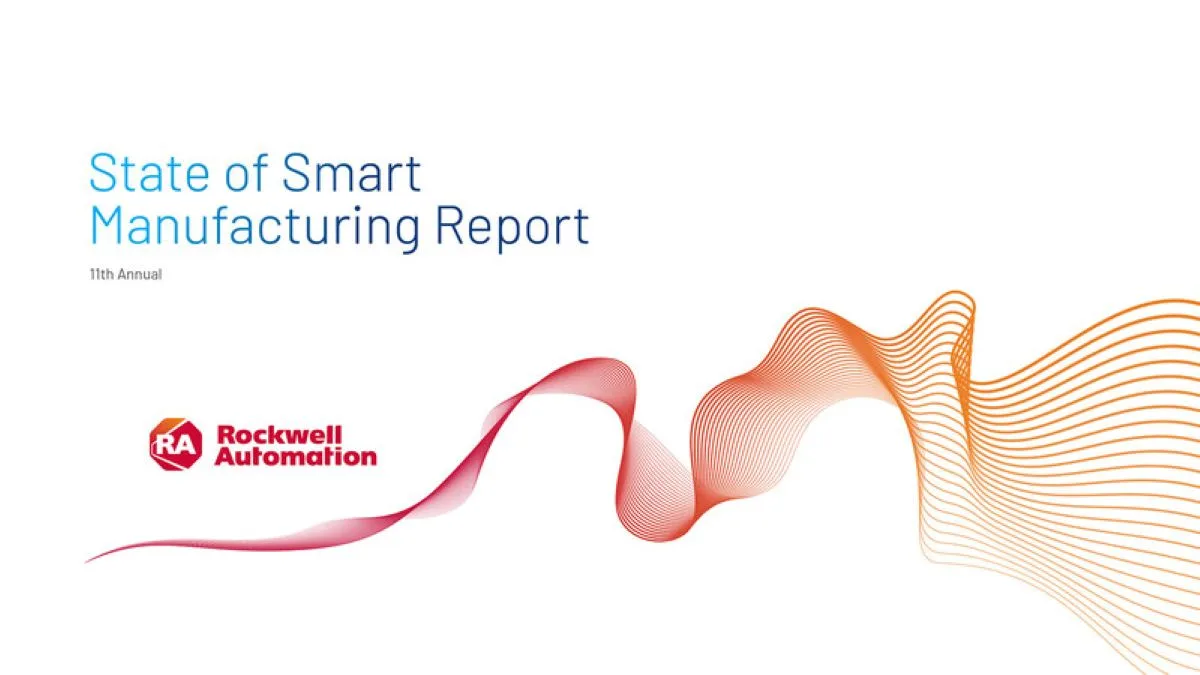
Rockwell Automation has released findings from its 11th annual State of Smart Manufacturing Report, revealing significant outcomes about the importance of digital transformation in the global manufacturing landscape.
DIGITAL ADOPTION MOVES BEYOND THE PILOT PHASE
A new global study from Rockwell Automation has found that digital transformation is now viewed as a business necessity by manufacturers worldwide, with 90 percent saying it is essential to remain competitive.
The findings come from the company’s 11th annual State of Smart Manufacturing Report, which surveyed more than 1,500 manufacturers across 17 countries. The report highlights a significant shift in the sector, with organizations focusing less on whether to adopt digital technologies and more on how to scale them effectively and generate measurable value.
According to the study, manufacturers are increasingly moving beyond small-scale pilot projects and embedding smart manufacturing technologies into day-to-day operations. Nearly six in 10 respondents said they are actively using smart manufacturing technologies operationally, while only 18 percent remain in pilot mode.
The report also found that around one-third of operating budgets continue to be allocated to industrial technology initiatives, signaling sustained long-term investment in digital transformation strategies.
AI AND CONNECTED OPERATIONS DRIVE INVESTMENT
The research points to growing adoption of artificial intelligence (AI) and connected technologies across manufacturing operations. Manufacturers are increasingly investing in tools that support resilience, productivity, and data-driven decision-making.
“Across the industry, manufacturers are facing more complexity and pressure than at any point in the last decade,” says Blake Moret, Chairman and CEO.

“What stands out in this year’s research is not just the challenges, but how leaders are responding – by making digital transformation a core operating priority. The organizations that are seeing results are those that connect technology, people, and processes to turn insight into better decisions, stronger performance, and greater resilience.”
The study identified AI augmentation as a growing trend within manufacturing operations, with businesses increasingly integrating AI-enabled systems into production environments and operational workflows.
At the same time, manufacturers continue to face challenges related to cybersecurity, operational complexity, and making effective use of the large volumes of industrial data being collected.
FOCUS SHIFTS TO MEASURABLE OUTCOMES
The 2026 report suggests the manufacturing sector has reached a turning point in its digital maturity, with companies increasingly prioritizing execution and measurable returns on investment over experimentation.
The research draws on more than a decade of global manufacturing data and examines how organizations are strengthening operational resilience, improving adaptability, and transforming workforce capabilities through digital technologies.
Industries represented in the survey include food and beverage, automotive, semiconductor, consumer packaged goods, energy, and life sciences, with participating companies ranging from organizations generating USD$100 million in revenue through to businesses exceeding $30 billion.
This article was produced by the editorial team at Manufacturing Outlook and published as part of the Outlook Publishing global network of B2B industry magazines.
Outlook Publishing delivers industry insights, company stories, and sector coverage across manufacturing, mining, construction, healthcare, supply chains, food production, and sustainability.
Manufacturing Outlook provides ongoing coverage of organisations and developments shaping the global manufacturing industry.