



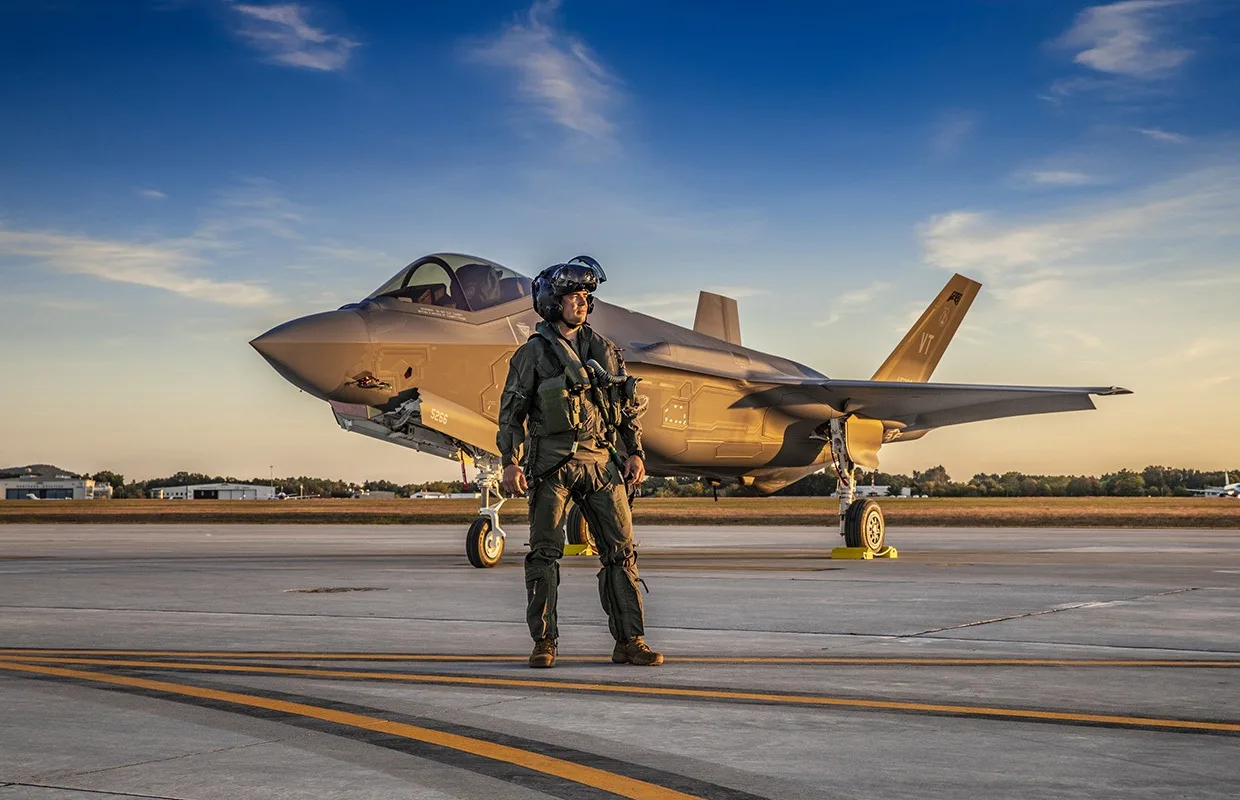
Lockheed Martin Aeronautics delivers innovative solutions to support ever-evolving mission needs. We speak to Vice President of International Business Development, Stephen Sheehy, about an exciting wave of next-generation innovation.
GREATER READINESS
Lockheed Martin is a US defense and aerospace manufacturer headquartered in North Bethesda, Maryland.
Its largest operating unit, generating over $30 billion in annual sales, is Lockheed Martin Aeronautics, which specializes in the research, design, development, and manufacture of advanced military aircraft, uncrewed systems, and related sustainment technologies.
The storied career of Vice President of International Business Development, Stephen Sheehy, can be broken into two distinct portions – 25-and-a-half years in the US Air Force (USAF) and 16 years with Lockheed Martin.
“I was hired as part of the F-35 Sustainment Program team, where I focused on the F-35 international partners – Australia, Canada, Denmark, Italy, the Netherlands, Norway, and the UK.
“In several F-35 sustainment positions, I interacted directly with our customers and developed the F-35 Integrated Sustainment Plan for each user. These nationally focused plans linked national sovereign requirements and ambitions with the common sustainment system,” he introduces.
Following that, Sheehy started his career in business development as Director for F-35 Sustainment.
In this role, he was responsible for developing and winning sustainment solutions for F-35 captures such as Belgium, Poland, Finland, and Switzerland.
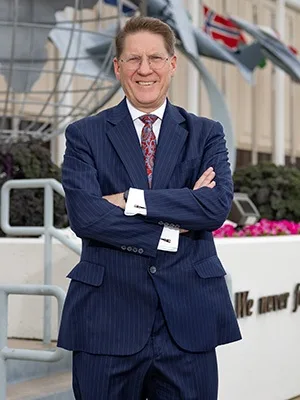
“When Lockheed Martin made a large pivot to make sustainment a strategic pillar of the company, I was selected to stand up the first-ever business development team focused on generating sustainment business,” Sheehy recalls.
Here, he built a global team from scratch for the development of integrated sustainment solutions for both US and international customers, ensuring these solutions met national requirements at an affordable cost.
Then, in January of 2025, Sheehy became the lead of Lockheed Martin Aeronautics’ Global Pursuit team.
“In this role, I oversee all international new business initiatives within Aeronautics and act as the main point of contact and senior advisor for crucial customer relationships.
“One of the primary objectives of my position is to cultivate and sustain long-term relationships with key decision-makers, potential business partners and, most importantly, the end-users of our company’s products,” he outlines.
INTERNATIONAL DEVELOPMENT
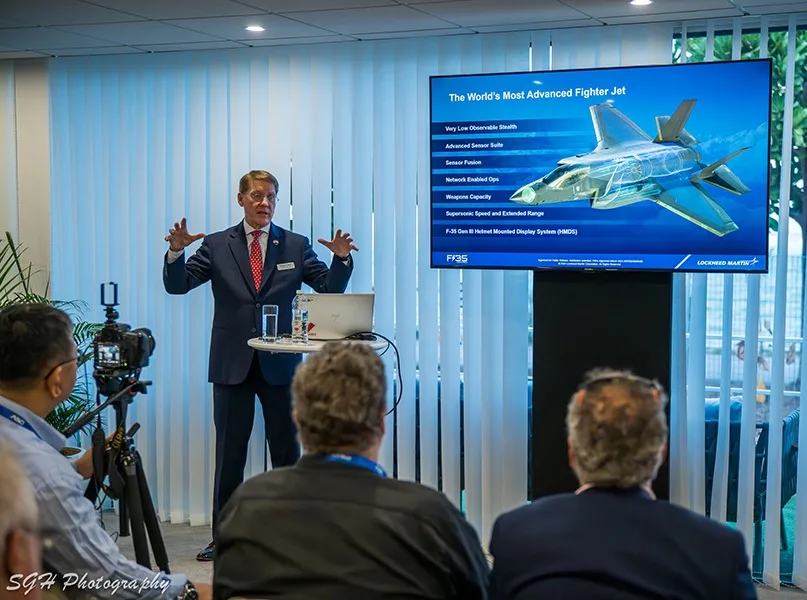
As the lead for Lockheed Martin’s international business development team, Sheehy’s role starts with understanding the customer.
“First, I need to understand what our customers need for their nation to obtain their goals, what they’re flying today, what their fleet readiness is, how long they’ve been flying these aircraft, and what kind of missions they fly,” he explains.
“Second, I want to understand their defense force vision for the future – where do they want to be in five, 10, or 15 years? In that vision, what are their priorities? Is a fighter force more or less important than an airlifter, or is modifying an aircraft more important to them than recapitalising their current fleet?”
The third pillar in understanding the customer is to determine what they value, which drives Sheehy to understand them culturally.
Then, the final part of his job is knowing the difference between a good and bad business deal, from both a customer and Lockheed Martin point of view.
“My team must have solid business acumen – this starts with working with the customer. We need to understand the budgetary cycle or how they obtain money for acquisitions.
“Along with the business acumen, I need to understand the customers’ acquisition or procurement methods; how do they buy military assets and what is their budget?” Sheehy sets out.
SUSTAINING PLATFORMS
In the vast and multifaceted aircraft business, there is a lifecycle that Sheehy knows he must be aware of.
“The general lifecycle for a platform is divided this way – 30 percent of the cost of an aircraft is buying the platform, while 70 percent of the cost is in sustaining it. To help your customer in both a financial and readiness way, you need to focus on helping them to sustain their platforms,” he expands.
“It is vital to start focusing on the aircraft sustainment portion when you begin a sale of the aircraft. It is always cheaper to design in sustainment early in a program than add it in later.”
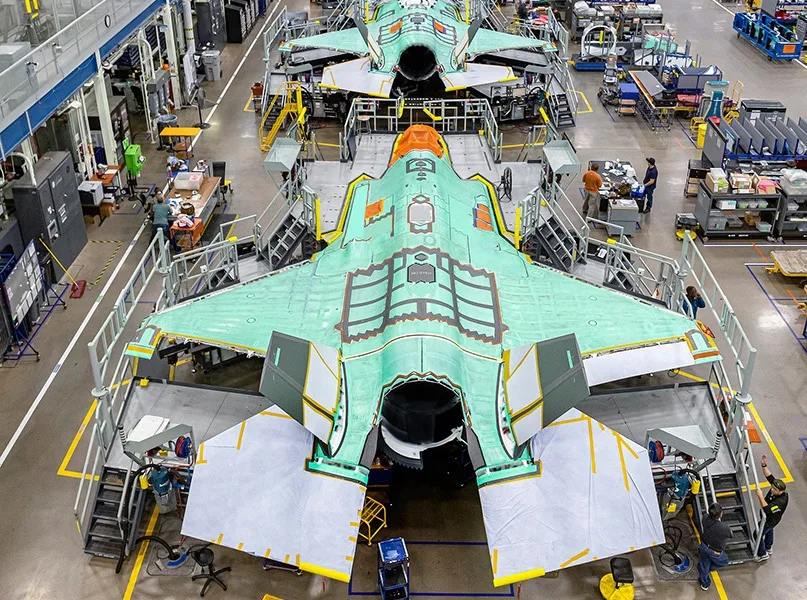
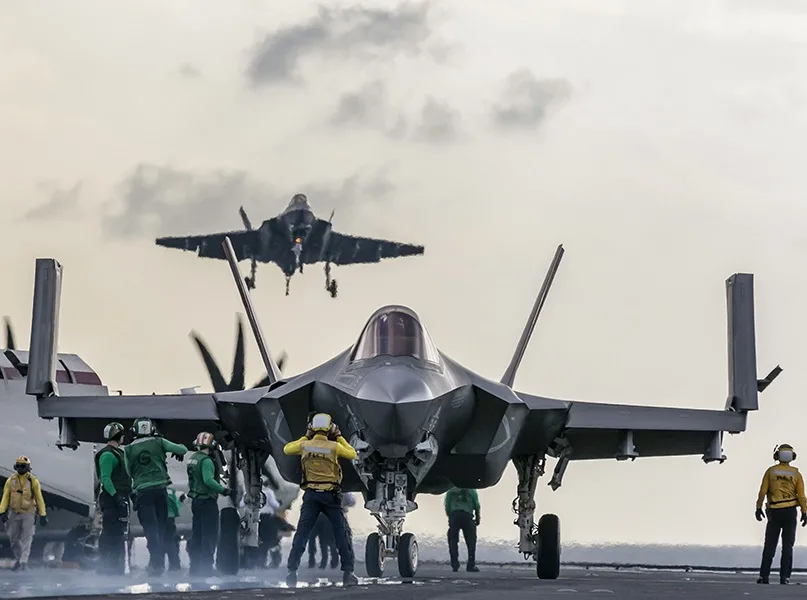
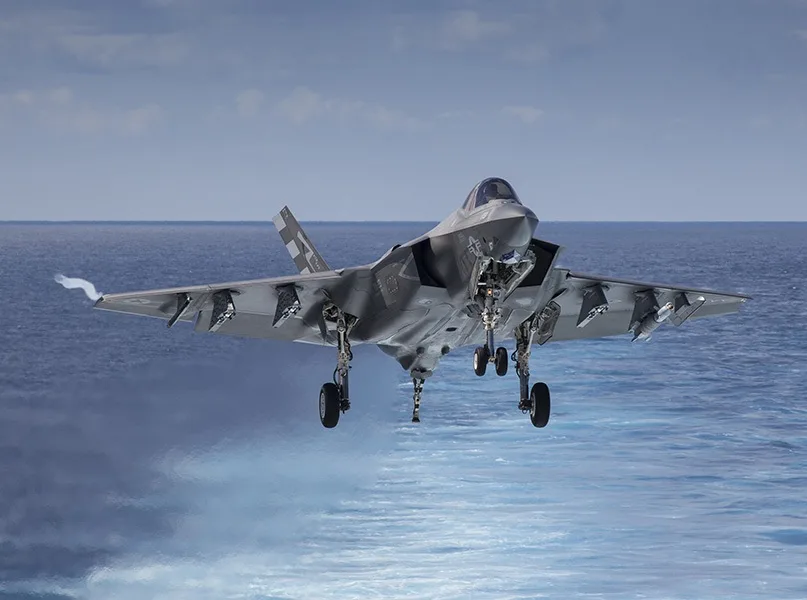
As the F-35 competes around the globe, each nation has determined the aircraft has the lowest lifecycle cost because of its cost-efficient sustainment system that is built in from the beginning.
“The bottom line is, the best way to sell more aircraft is to help our customers keep their current aircraft flying,” acknowledges Sheehy.
HERCULEAN EFFORT
Continuous improvement is a core factor of Lockheed Martin’s operational culture.
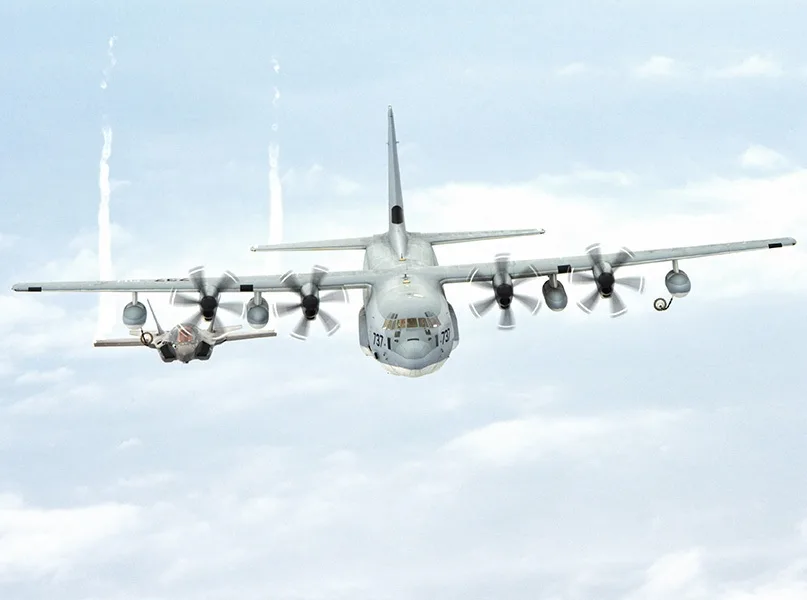
The C-130 Hercules is a four-engine turboprop military transport aircraft, renowned globally as the ultimate tactical airlifter – living proof that continuous improvement works.
“The C-130 production line is the longest operating military production line in the world – it has been producing aircraft for more than 75 years. In that time, the outer mold line or shape of the aircraft hasn’t really changed as its design is optimal for a tactical airlifter,” Sheehy tells us.
It can land on short runways in the high altitudes of mountain towns or fly transoceanic cargo runs with low fuel usage.
Then, the aircraft can land on a desert dirt strip to insert Special Ops troops in the middle of the night.
“Over the years, we have upgraded the engines and props for more speed while burning less fuel, upgraded the cargo loading system to reduce transition time between missions, and updated the cockpit, which reduces the number of crew members needed to only two,” he states.
All this is the perfect example of continuous improvement with proven historical success.
GREATER READINESS
For Lockheed Martin, greater readiness is rooted in continuous improvement.
“We must continually analyse the next threat and update our platforms to outpace that threat. At the same time, we need to engage our customers and see how they’re using our platforms,” Sheehy muses.
Lockheed Martin really learns what its platforms can do once operators get their hands on them.
Both pilots and maintainers are using these platforms in ways the company has never thought of before, meaning Lockheed Martin learns from what they are doing and improves on those capability multipliers.
“We also need continuous improvement solutions that can reduce manpower, decrease time to repair, or increase part reliability. Each of those items increases readiness but also reduces the lifecycle cost,” explains Sheehy.
Meanwhile, Lockheed Martin is also looking at what it can do at the point of impact. This means developing systems using augmented reality, artificial intelligence (AI), optimized supply chain software, and advanced computing to multiply the ability of a single maintainer.
“We have systems that allow the maintainer to see through the skin of the aircraft or allow AI to predict when a part is going to fail and get it to the maintainer before they know they need it,” he continues.
Harnessing this type of technology on the flightline improves greater readiness in brand-new ways.
A LOYAL NEW WINGMAN
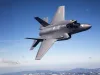
One of the latest ongoing projects for Lockheed Martin is its Lockheed Martin Vectis™ combat collaborative aircraft, a platform designed to be autonomous and a loyal wingman to the F-35.
“Vectis™ is designed to have multi-role capability with common outer mold line and modular payload bays so a single platform can conduct air-to-air, air-to-ground, and intelligence, surveillance, and reconnaissance (ISR) missions,” Sheehy acclaims.
Operating in a multi-domain connectivity, Vectis™ will enhance situational awareness and act as a force multiplier for air, land, and sea forces.
“We will be able to rapidly upgrade Vectis™ through open architecture and staying connected to the US government reference architecture. It will be survivable and lethal because of its low observable or stealth design,” he finishes proudly.
By using advanced design and manufacturing techniques, Lockheed Martin will ensure Vectis™ remains affordable.
This article was produced by the editorial team at Manufacturing Outlook and published as part of the Outlook Publishing global network of B2B industry magazines.
Outlook Publishing delivers industry insights, company stories, and sector coverage across manufacturing, mining, construction, healthcare, supply chains, food production, and sustainability.
Manufacturing Outlook provides ongoing coverage of organisations and developments shaping the global manufacturing industry.