


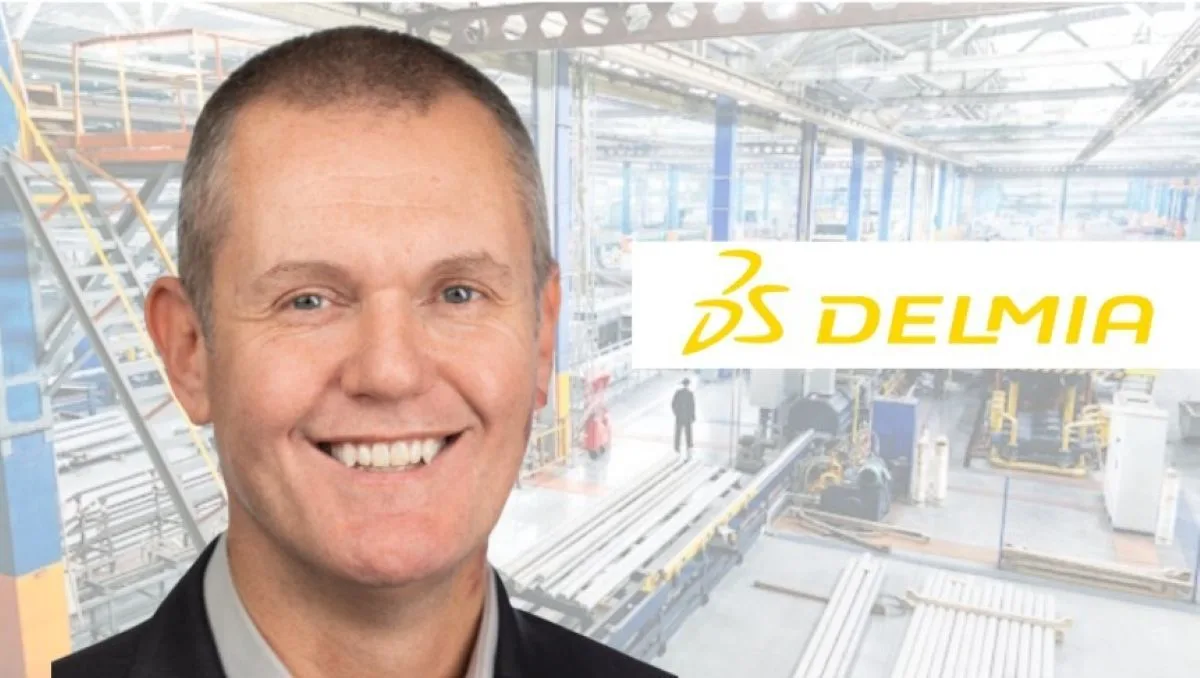
Adrian Wood, Director of Strategic Business Development at DELMIA, gives his insight into why manufacturers need to move beyond ageing IT and spreadsheet-driven planning and adopt model-based governance built on a unified data transformation.
Replacing legacy systems
How often have you had that sinking feeling when seeing a late engineering change order? Do you relive the stress of the cascading events? Someone updates a spreadsheet schedule, someone else updates a Manufacturing Bill of Materials (MBOM) extract, a supplier works off an old revision, and the shop floor discovers a feasibility issue during ramp-up.
Spreadsheets and legacy systems aren’t inherently “bad tools”; they were just not designed to support the complexity and speed of today’s manufacturing environments. These tools might be able to scale information within their own scope but can’t provide the digital thread that orchestrates information across silos and reveals the true impacts of changes.
The overall business impact of inaction includes slower time-to-market, lower productivity, and higher costs related to quality and scrap. This, of course, also means there is a significant opportunity and ROI to transformation!
What does transformation look like?
Don’t think about transformation as just new software; it’s really a shift to a process of model-based governance that uses a unified data foundation and empowers the workforce to make better decisions and drive innovation at greater scale.
Today, your teams are probably spending significant amounts of effort translating and reconciling: engineering hands-off documents, manufacturing rebuild definitions, planning re-enter constraints. In the transformed world, the enterprise works from a shared, living definition, so change becomes faster, safer, and repeatable.
Here are some of the key elements to consider when thinking about the best practices of transformation:
- A Unified Data Foundation – Transformation accelerates when teams start to use (and trust) a single source of truth. Therefore, a common data model is key to connecting critical information across product definition, process plans, resources, and constraints. This allows seamless versioning, traceability, and the knowledge that the “current state” is always known.
- Orchestration Between Silos – Eliminating “translation loss” between engineering and manufacturing is the biggest “leap” in the transformation. Being able to rapidly see the impact of changes eliminates the need for costly, real-world corrections (seeing the impact on lines, tooling, suppliers, work instructions, etc.). Note that this link is bi-directional, so that governance works whether it starts upstream or downstream.
- Virtual Twin Simulation – Feasibility needs to be proven before you commit to execution. This can only be efficiently accomplished in the virtual model of the production systems. Virtual twin technology leverages the unified data model and permits the governance for teams to experiment and visually analyse impacts and innovation in a scientific and collaborative environment.
- AI-Assisted Decision Support – Developing “optimal” plans requires humans to let the algorithms do the heavy lifting. The complexity of manufacturing operations leads to an almost infinite array of possibilities based upon real-world constraints and changes to demand and supply. Artificial intelligence has become adept at consuming vast amounts of real-time (and historic) data to help guide planners to make better decisions that are feasible and trusted.
Although there are more aspects to a complete transformation, high-tech manufacturers are leveraging these foundational elements to move away from manual methods and disconnected tools. Being able to align around trusted data, simulate, and make optimised decisions allows them to consistently respond faster and with less risk.
What are the results?
Leaders care about impacting the core elements of their products and business: speed, cost, quality, service, and risk. There are many daily inefficiencies that are the root causes of poor business performance, but digital transformation can address all of these with significant results. Below is an analysis of existing challenges and their results once the transformations have taken place.
- ECO meetings debating whose file is correct: instant impact analysis of the virtual twin
- Ramp issues discovered in pilot builds: feasibility proven as part of design and engineering
- Schedulers chasing parts in spreadsheets: constraint-aware schedules with what-if scenarios
- Training via tribal knowledge: visual, validated work instructions (and ergonomic checks)
- Quality investigations via email threads: traceability to exact revision, lot, and operation
There are, certainly, many more examples of root-cause challenges, but the broad scope of virtual twins allows companies to model and simulate almost any part of the process needed, and the scientific accuracy is able to capture any level of detail.
How to get started
A good place to start is usually where the biggest challenge or impact occurs, although it is feasible to run smaller pilots (especially if the company is new to transformation, AI technology, or perhaps has a “shaky” data foundation).
Regardless, choosing a single value stream is appropriate; that could be NPI ramp, ECO responses, quality escapes, etc. This ensures that there will be defined goals and stakeholders to drive the process.
Next, companies should focus on building the core backbone of the model (including data) to define the product, processes, resources, and constraints. Developing this virtual twin is key because making confident and trusted decisions relies upon a solid foundation.
After these steps, companies can start to define and experiment with the connection points and governance between engineering and manufacturing. This stage provides the first steps into the “playground” that will become the centre of the transformation, allowing stakeholders to not only align on common models and decisions, but also experiment with new ideas and opportunities for innovation.
Finally, as each decision is made, the virtual twin can validate and record the outcomes and provide a closed loop from execution back to engineering that drives continuous improvements.
What is the value?
Of course, it depends upon the problem that you’re solving, but the important takeaway is that the transformation of day-to-day operations does impact all of the critical business goals that leaders will be expecting.
- Faster ramp/fewer late changes
- Lower scrap/rework and fewer quality escapes
- Better schedule adherence and service levels
- Lower inventory buffers and less obsolescence
- Higher engineering productivity and repeatability across sites
It’s important not to forget the value of the human element of transformation. There are many warnings that digital transformation and AI will reduce and eliminate the manufacturing workforce, but they are not completely justified.
Firstly, most manufacturers are still struggling with gaps in workers and skills, so some of the transformation will help to fill the empty space, but existing workers will also benefit from becoming far more productive and consistent.
For further evidence, Panasonic Connect is an example of a company that has undergone digital transformation to great effect. Originally facing problems of static spreadsheets, a lack of real-time collaboration, and the challenge of the “data drift” between engineering and the shop floor, Panasonic Connect looked to DELMIA solutions for help.
DELMIA allowed Panasonic Connect to move away from analogue and fragmented data to a unified platform. By digitising its expertise and connecting to a “Single Source of Truth,” Panasonic Connect was able to visualise the entire factory in real-time. This transformation allowed them to track progress accurately and synchronise global operations; a direct result of replacing “Ageing IT” with the 3DEXPERIENCE platform.
DELMIA centralised and managed the unorganised data and analogue info, and because of that, was able to track in real-time the overall factory line operations of Panasonic Connect.
Spreadsheets and ageing IT really can’t keep up with high-tech manufacturing complexity. This means changes propagate slowly, issues surface late, and teams waste time reconciling data instead of improving performance.

About the author
Adrian Wood is the Strategic Business Development at DELMIA. He has spent over 20 years in customer-facing positions ranging from sales and marketing to fulfilment and account management.
Wood’s career focus has been on problem-solving and development within emerging and rapid growth segments to enable customer success across a wide range of industries, from tech to retail and logistics across multiple disciplines such as supply chain, manufacturing, simulation, and analytics.
This article was contributed by a guest author and published by the editorial team at Manufacturing Outlook, part of the Outlook Publishing global network of B2B industry magazines.
Outlook Publishing features leadership insights, industry perspectives, and company stories from organisations shaping sectors including manufacturing, mining, construction, healthcare, supply chains, food production, and sustainability.
Manufacturing Outlook explores the companies, technologies, and leaders driving progress across the global manufacturing industry.