


BCG report finds AI-enabled factory transformation could deliver productivity gains of up to 60% while reshaping global production strategies
Rewriting the Rules of Global Manufacturing
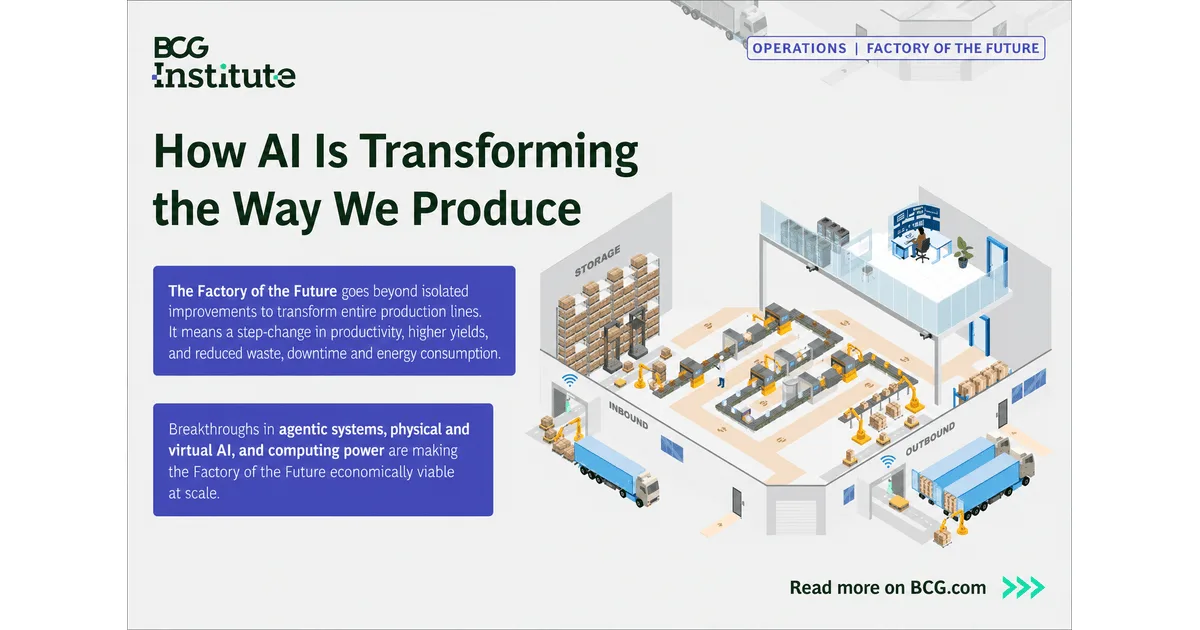
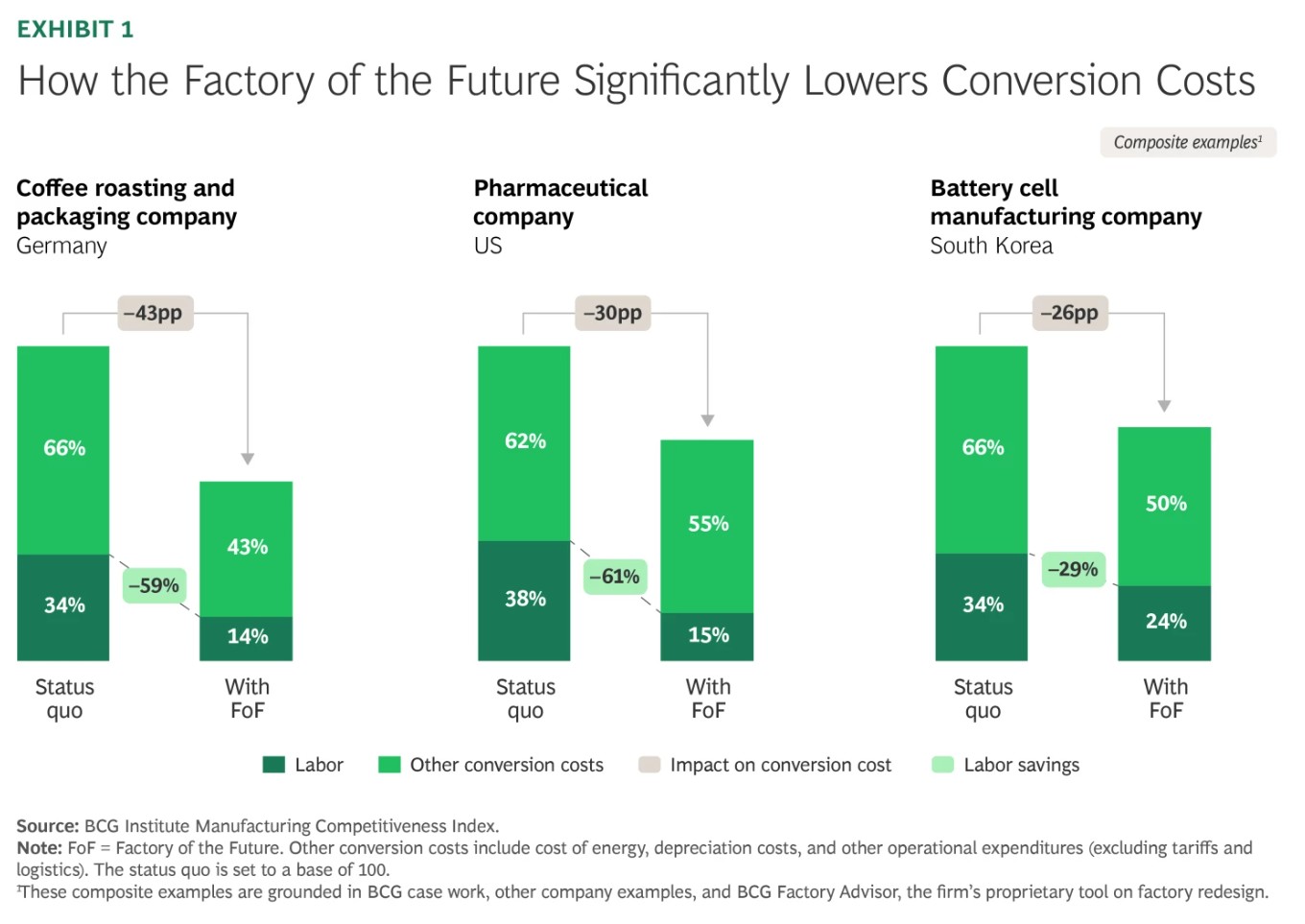
Artificial intelligence, automation and digital manufacturing systems are rapidly changing the economics of industrial production, according to a new report from Boston Consulting Group and the BCG Institute. The findings suggest manufacturers that modernize production facilities with factory of the future technologies could unlock productivity gains of up to 60% and strengthen competitiveness even in traditionally high-cost regions.
The report, How the Factory of the Future Is Reshaping the Economics of Manufacturing, combines a global survey of 1,000 manufacturers with proprietary quantitative analysis examining how AI-enabled production systems are transforming manufacturing operations at scale.
Factory Transformation Becomes a Competitive Imperative
The report argues that competitiveness in manufacturing is no longer determined primarily by labor cost differences or offshoring strategies. Instead, performance increasingly depends on how effectively manufacturers redesign and deploy advanced production setups.
According to the report, upgrading facilities with factory of the future capabilities can now outperform offshoring strategies, even when lower-cost countries also adopt advanced manufacturing technologies.
Without these upgrades, roughly $1.03 trillion of manufacturing value is at risk of relocation out of Western Europe, while another $440 billion is at risk in the United States.
“Manufacturers are entering a new era where competitiveness is no longer defined by static cost comparisons, but by how effectively they can redesign production setups end to end,” said Daniel Kuepper, BCG managing director and senior partner, fellow at the BCG Institute, and coauthor of the report. “The factory of the future is fundamentally changing how companies create value and how they think about where to produce.”

AI and Automation Drive End-to-End Production Gains
The report highlights how AI-powered production environments are being redesigned holistically to improve multiple operational metrics simultaneously, including energy consumption, material efficiency, throughput and yield.
As manufacturers contend with geopolitical uncertainty and increasing supply chain volatility, advanced manufacturing technologies are also becoming central to regionalization and resilience strategies.
The report notes that production footprint decisions are increasingly shaped by a facility’s ability to deploy highly productive factory of the future technologies rather than solely by labor arbitrage or logistics economics.
This shift is particularly important for manufacturers seeking to produce closer to end markets while maintaining competitiveness.
Manufacturing Benefits Vary by Sector and Geography
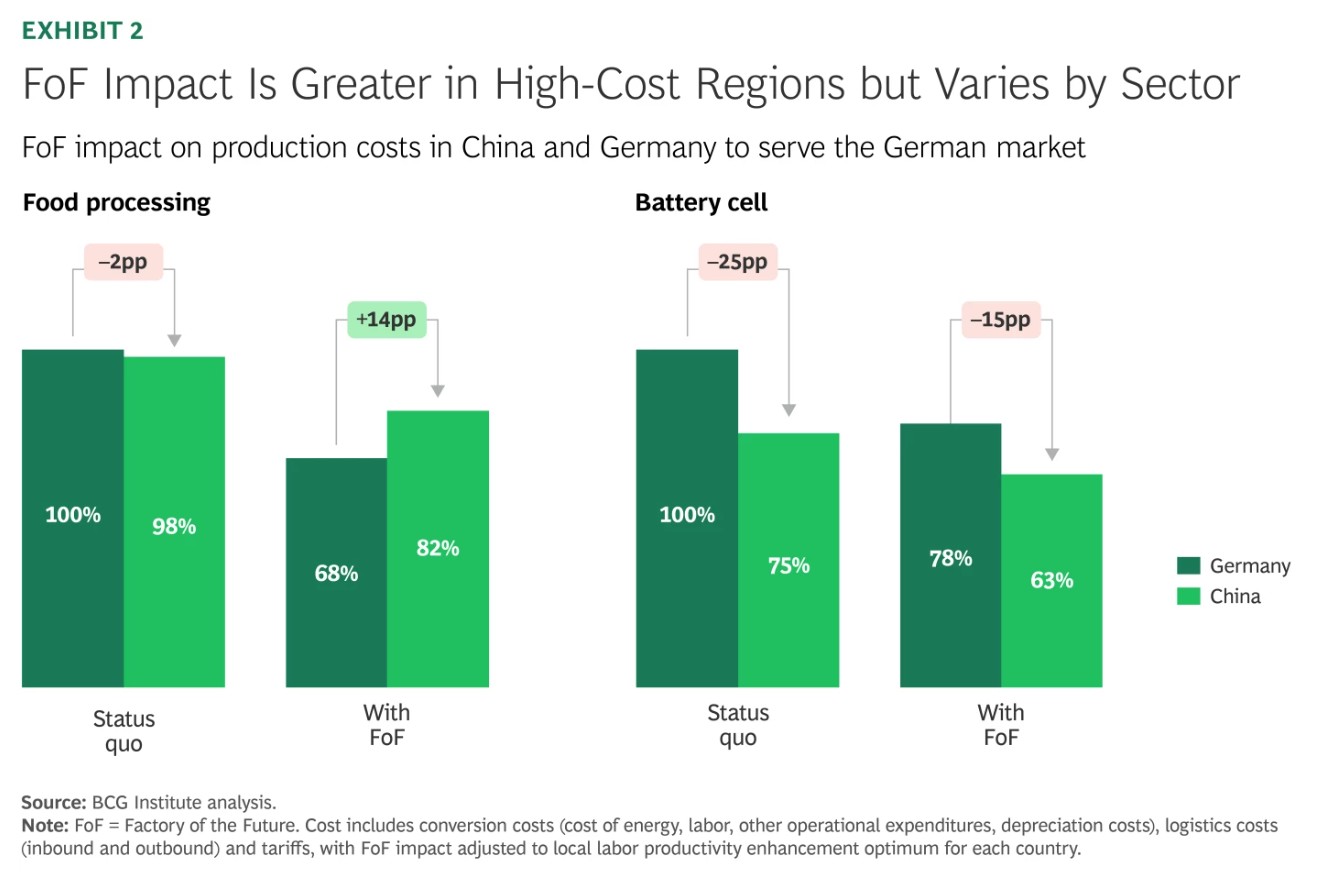
BCG’s analysis found that the benefits of factory of the future adoption differ significantly depending on sector characteristics and regional cost structures.
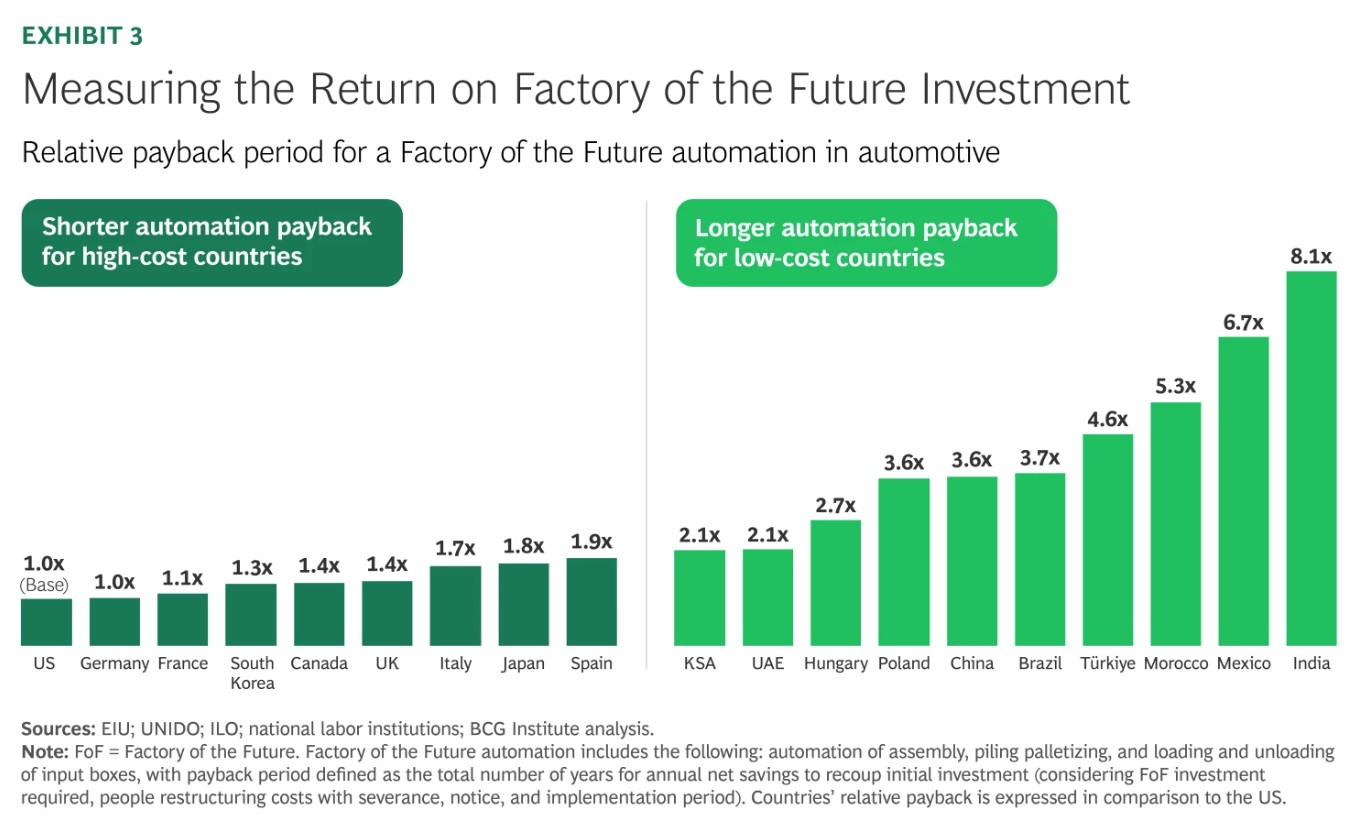
Higher-cost manufacturing regions stand to gain more from automation of labour-intensive processes, energy optimization and improved production efficiency, helping narrow competitiveness gaps with lower-cost markets.
Sectors with higher logistics costs, including food and beverage manufacturing, may see additional advantages from producing closer to customers.
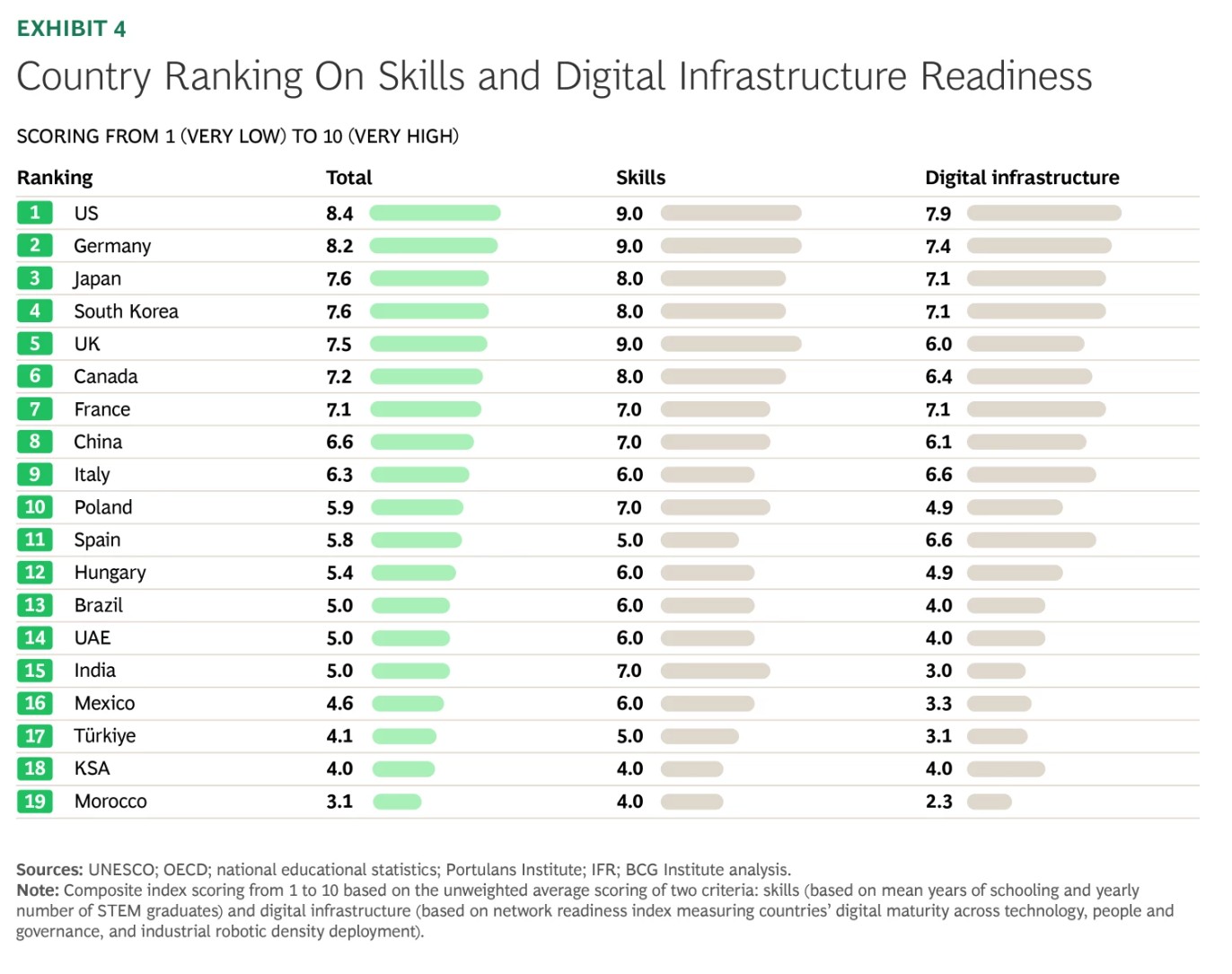
The report also identifies workforce capabilities and digital infrastructure as critical enablers of advanced manufacturing adoption. In the BCG Institute survey, 87% of respondents said access to talent and skills had become more important for sustaining factory of the future deployment, while 69% identified digital infrastructure as increasingly critical.
Advanced Manufacturing Reshapes Global Production Strategy
The report concludes that manufacturers must increasingly align technology deployment with broader production footprint strategies as the global manufacturing landscape becomes more dynamic.
Rather than relying on traditional cost comparisons, companies are being pushed to evaluate how advanced production technologies can redesign operations and unlock new value across manufacturing networks.
“Companies that integrate footprint strategy with advanced manufacturing capabilities will be best positioned to compete in the decade ahead,” Kuepper said.
The full report, How the Factory of the Future Is Reshaping the Economics of Manufacturing, is available from Boston Consulting Group.
This article was produced by the editorial team at Manufacturing Outlook and published as part of the Outlook Publishing global network of B2B industry magazines.
Outlook Publishing delivers industry insights, company stories, and sector coverage across manufacturing, mining, construction, healthcare, supply chains, food production, and sustainability.
Manufacturing Outlook provides ongoing coverage of organisations and developments shaping the global manufacturing industry.