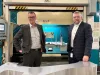



As a subsidiary of Dassault Systèmes, DELMIA is on track to shape the manufacturing industry of the future. We speak to Guillaume Vendroux, CEO, about the cutting-edge 3DEXPERIENCE platform and the significance of its partnership with NVIDIA.
BRIDGING THE REAL AND VIRTUAL WORLDS
Multinational corporation Dassault Systèmes (Dassault) has become a titan of the software landscape.
Established in 2000, DELMIA is Dassault’s comprehensive digital manufacturing and supply chain brand for its global operations.
“DELMIA’s applications empower manufacturing, supply chain, and service organisations to plan, manage, optimise, and execute how they run their end-to-end value networks on Dassault’s 3DEXPERIENCE platform,” introduces Guillaume Vendroux, CEO of DELMIA.
Indeed, the company connects operations in both the real and virtual worlds, helping businesses to evaluate and make better decisions that improve agility, cost, margins, service, and sustainability.
Since launching the brand over 25 years ago, Dassault has developed and expanded DELMIA from a pure focus on digital manufacturing to a full global operations portfolio.
“DELMIA offers tailored solutions for diverse sectors, from discrete manufacturing to process manufacturing and the supporting supply chains. We help customers across a wide range of industrial sectors such as life sciences, metals, high tech, aerospace, industrial equipment, and transportation and mobility,” he surmises.
UNIFIED ENVIRONMENT
3DEXPERIENCE is Dassault’s business and innovation platform that creates a unified environment, connecting people, data, and processes across organisations’ ecosystems, including the entire manufacturing lifecycle.
The platform powers DELMIA’s applications, enabling the company to deliver operations-focused solutions that drive efficiency, agility, and innovation.
Its core manufacturing capabilities include a single version of the operational truth.
“By centralising all data, 3DEXPERIENCE eliminates silos between engineering, manufacturing, and supply chain teams, ensuring everyone works from the same accurate, up-to-date information,” Vendroux details.
The platform also creates a state-of-the-art virtual twin experience, whereby manufacturers can model, simulate, and optimise processes in a virtual environment before execution.
This uses highly accurate virtual models of products and production lines to maximise operational efficiency when executing the project in the real world.
3DEXPERIENCE additionally grants users with greater control and visibility. DELMIA’s specialised applications are presented as ‘roles’, providing users with tailored apps for their needs and delivering an impactful user experience and collaborative decision support within their operations, factories, and supply chains.
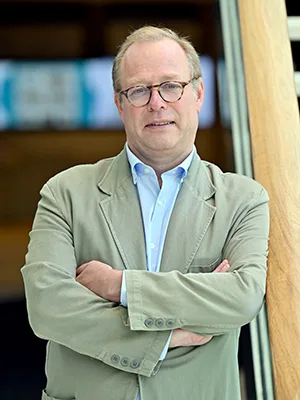
“By centralising all data, 3DEXPERIENCE eliminates silos between engineering, manufacturing, and supply chain teams, ensuring everyone works from the same accurate, up-to-date information”
Guillaume Vendroux, CEO, DELMIA
EXPANDING CAPABILITIES
Significantly, DELMIA extends Dassault’s capabilities beyond design and engineering into production and logistics.
Case in point, the company bridges the real and virtual worlds through applications like DELMIA Augmented Experience, which brings digital data to operators on the shop floor via augmented reality (AR) to enhance assembly and maintenance processes.
Elsewhere, the company provides world-class operations management services, shifting Dassault’s expertise into manufacturing execution systems (MES) and manufacturing operations management (MOM).
“This enables control of global production sites and synchronises operations across production, quality, warehousing, and maintenance,” highlights Vendroux.
From a supply chain perspective, DELMIA’s specialist apps facilitate artificial intelligence (AI)-driven planning capabilities to solve complex supply chain and workforce challenges by combining optimisation, ‘what if’ scenario planning, and a real-time understanding of activities for optimal results.
BREAKTHROUGH INDUSTRIAL AI ARCHITECTURE
Earlier this year, Dassault partnered with NVIDIA, integrating the latter’s Omniverse physical AI libraries into DELMIA virtual twins – establishing breakthrough industrial AI architecture.
“NVIDIA contributes physical AI and accelerated computing, enabling the simulation of robotics-grade physics and perception at scale. DELMIA delivers a semantically rich virtual twin of production systems, connecting design intent to real-world execution,” Vendroux outlines.
The company’s partnership with NVIDIA is building an industrial AI platform comprising three pillars: a new architecture with AI for scale, science-validated industry world models, and an agentic platform grounded in science and industry.
“We are supporting our customers with mission-critical reliability and scalability, scientific accuracy, traceability, and regulatory compliance. This includes constructing the foundation for agile, software-defined production,” he adds.
This combination empowers manufacturers to design, simulate, and operate complex systems with unprecedented confidence and precision.
By testing autonomous behaviour in realistic virtual conditions, companies can prove changes virtually before implementing them, minimising commissioning surprises, optimising material flow, and validating how production should respond to change.
“The result is the emergence of software-defined production systems where human-led decisions are supported by AI that tests and validates options in the virtual twin. This creates a feedback loop where the virtual world validates better outcomes for the real world, driving faster adaptation with reduced risk and rework,” continues Vendroux.
“We are supporting our customers with mission-critical reliability and scalability, scientific accuracy, traceability, and regulatory compliance. This includes constructing the foundation for agile, software-defined production”
Guillaume Vendroux, CEO, DELMIA
THE FUTURE OF MISSION-CRITICAL AI
The partnership between Dassault and NVIDIA aims to revolutionise mission-critical AI and drive long-term value creation across manufacturing and logistics by establishing a robust industrial AI foundation.
The collaboration addresses the limitations of traditional production systems, which struggle with rigidity and real-world variability.
It introduces agile, software-defined production powered by virtual twin technology and physical AI to foster a new era of autonomous systems.
The impact of this partnership extends beyond operational efficiency. By minimising physical prototyping and optimising resource use, the collaboration supports sustainability goals, reducing waste and energy consumption.
“It also lowers the barriers to innovation, allowing manufacturers to experiment with new layouts, workflows, and automation strategies in a risk-free virtual environment. This agility ensures adaptability to market demands and positions manufacturers to remain competitive,” Vendroux notes.
Ultimately, the Dassault-NVIDIA collaboration is about building the factories of the future – autonomous, efficient, and sustainable – whilst setting a new standard for mission-critical AI in manufacturing and beyond.
The partnership is poised to revolutionise modern manufacturing over the next five years by enabling agile, software-defined production systems through a robust industrial AI foundation.
Dassault and NVIDIA will shape the future by accelerating adaption and scaling, enabling autonomous production, driving sustainability, fostering innovation, and establishing a new industrial AI standard.
“In summary, this partnership will enable manufacturers to build autonomous, efficient, and sustainable factories, transforming the industry and setting a new standard for modern manufacturing,” Vendroux concludes.
This article was produced by the editorial team at Manufacturing Outlook and published as part of the Outlook Publishing global network of B2B industry magazines.
Outlook Publishing delivers industry insights, company stories, and sector coverage across manufacturing, mining, construction, healthcare, supply chains, food production, and sustainability.
Manufacturing Outlook provides ongoing coverage of organisations and developments shaping the global manufacturing industry.