



Manufacturers cannot control the market price of electricity, oil, or gas. They are largely price takers, and they are often exposed to external shocks such as tariffs and supply chain disruptions. What they can control is how much energy they need to produce each unit of output and how vulnerable they are to price volatility.
That is why high energy prices are often the moment when efficiency investments make the most economic sense. Whether the choice is better equipment, process upgrades, on-site solar, or battery storage, the value of reducing purchased energy rises when power and fuel are expensive. Payback periods get shorter, resilience becomes more valuable, and the business case gets easier to defend.
The key point is that sustainability is not separate from competitiveness. For manufacturers, it is often a way to protect margins. The firms that invest in lower energy intensity when prices are high are not just reducing emissions. In manufacturing, efficiency is not just a sustainability strategy – it is a hedge against volatility.
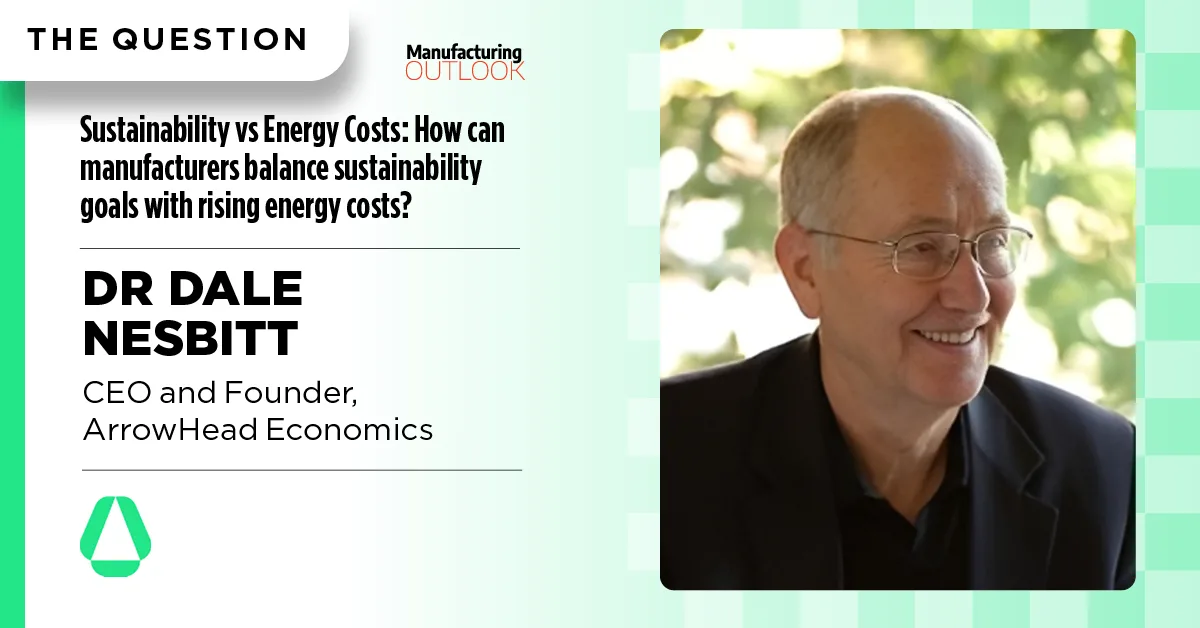
Dr. Dale Nesbitt
CEO and Founder, ArrowHead Economics
About Dr. Dale Nesbitt
Dr Dale Nesbitt is a noted national and international energy, resource, microeconomics, modelling, and risk analysis expert. Nesbitt has been in the gas, oil, electricity, and energy decision analysis and modelling business since 1974 and is the CEO and Founder of ArrowHead Economics.
About ArrowHead Economics
Arrowhead Economics models global energy and materials supply chains to quantify prices, flows, and investment.
The Question is a thought leadership series published on Manufacturing Outlook, created to explore the questions shaping global production, industrial innovation, automation, and operational excellence.
Manufacturing Outlook features leadership insights and company stories from organisations driving progress across manufacturing, engineering, automotive, aerospace, maritime, and advanced industrial sectors.
Produced as part of the Outlook Publishing global network of B2B industry magazines, The Question brings focused executive insight to audiences engaged with the companies, technologies, and decisions shaping the future of manufacturing.