



Manufacturers are increasingly recognising that operational efficiency and sustainability are not competing priorities but closely connected challenges.
Businesses with strong visibility across their operations are finding opportunities to reduce waste, improve efficiency, and better understand their carbon footprint. Increasingly, the companies making the most progress are embedding sustainability into everyday operational decision-making, rather than treating it as a separate reporting exercise.
The same operational data used to manage production, materials, machine usage, and overheads is now helping manufacturers build a clearer picture of energy consumption, emissions, and long-term operational resilience. As sustainability reporting requirements continue to evolve, manufacturers are looking for practical ways to integrate carbon accountability into existing operational and enterprise resource planning (ERP) processes rather than creating separate systems.
In many cases, the manufacturers improving efficiency and reducing waste are also becoming more resilient, competitive, and cost-effective in the long term.
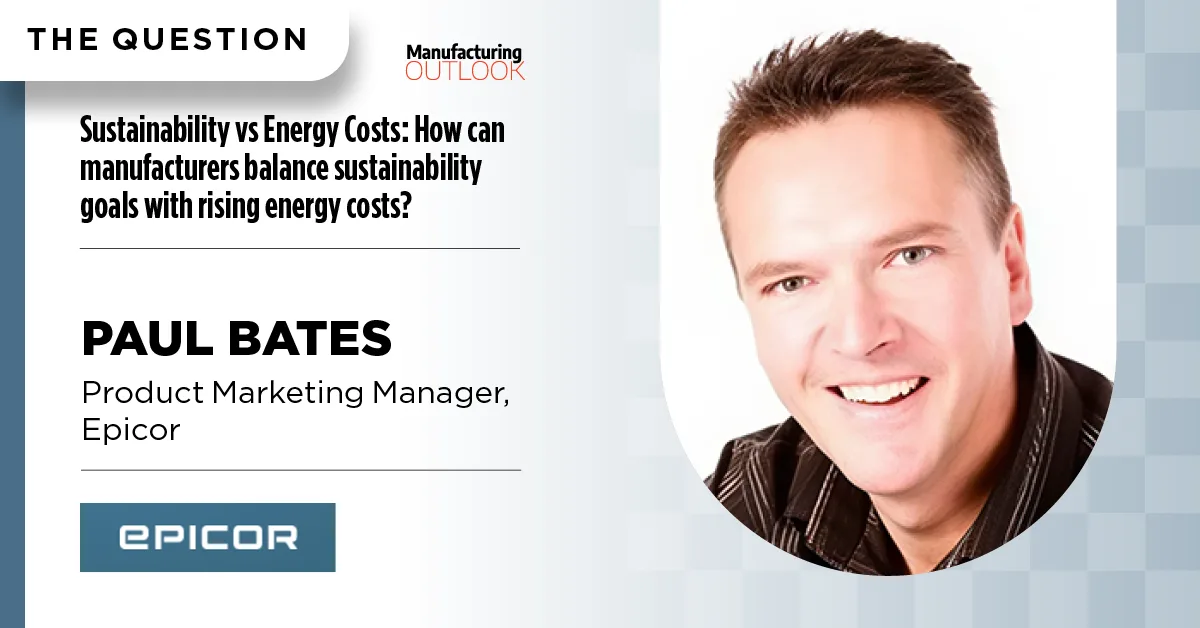
Paul Bates
Product Marketing Manager, Epicor
About Paul Bates
Paul Bates is a senior Product Marketing Manager with global responsibility for sustainability, shipping, e-commerce, and related products in Epicor. Before that, Bates worked in a variety of product and marketing management roles in the telecoms, finance, cybersecurity, and cloud industries.
The Question is a thought leadership series published on Manufacturing Outlook, created to explore the questions shaping global production, industrial innovation, automation, and operational excellence.
Manufacturing Outlook features leadership insights and company stories from organisations driving progress across manufacturing, engineering, automotive, aerospace, maritime, and advanced industrial sectors.
Produced as part of the Outlook Publishing global network of B2B industry magazines, The Question brings focused executive insight to audiences engaged with the companies, technologies, and decisions shaping the future of manufacturing.