




For TURBOCAM, shifting focus from the automotive to the aerospace industry is opening the door to innovative possibilities, propelling the company toward a future where groundbreaking technology takes flight. Michael Noronha, President, tells us more.
A STRATEGIC SHIFT FROM WHEELS TO WINGS
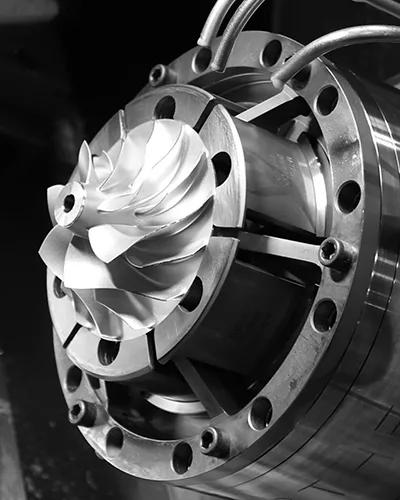
As a global leader in innovative manufacturing solutions, TURBOCAM specializes in high-performance turbomachinery flow-path components.
Focusing on aviation, space transport, automotive turbocharging, power generation, and industrial gas compression, the company incorporates prototyping, integrated product development, high-volume production, enhanced surfaces, advancing metals technologies, and supply chain management into its operations.
However, TURBOCAM has undergone a significant transformation since its establishment in 1985, refocusing its attention away from a heavy reliance on the automotive industry.
“A decade ago, we relied on a single commercial vehicle (CV) engine manufacturer for over 70 percent of our business; today, it’s about 25 percent,” introduces Michael Noronha, President, reflectively.
“Our customer expressed concerns about this reliance, emphasizing the need to diversify our revenue streams. We were also motivated by the risk of the CV turbocharger market emulating the passenger vehicle (PV) market, which was both capital-intensive and low-profit.”
CV turbo parts are lower in rate, complex, and expensive, whereas PV turbo parts are comparatively high in rate, simple, and cheap.
“The manufacturing processes have a lot of overlap. We were afraid that manufacturers with leftover PV capacity, as electric vehicles (EVs) took over the market, would start moving into the CV space to fill their shops. That proved somewhat true,” he adds.
This pivot necessitated a significant long-term investment from TURBOCAM’s automotive profits into aerospace technology and infrastructure, which proved particularly challenging in 2020 amid the COVID-19 pandemic, when the company experienced a temporary 85 percent decline in its commercial aviation business.
While the automotive industry is cyclical and predictable over three-year timeframes, aerospace is more volatile due to complex components and limited sourcing options.
Market conditions within specific aircraft programs can change suddenly in response to supply chain shortages or safety incidents, affecting orders and production rates. In contrast, the automotive supply chain is more resilient, with clearer market demand.
“Our goal in diversifying was to stabilize financial performance and seek further growth,” Noronha considers.
“While our automotive segment grew amid rising US heavy-truck emissions requirements in the 2000s, the market has since leveled off, requiring us to defend against global competition.”
Currently, there’s significant interest in electric vertical takeoff and landing (eVTOL) vehicles, which could replace helicopters in some use cases and shift demand from luxury cars to aviation.
“Initially, we avoided the eVTOL crowded space due to uncertainty in identifying winners and doubts about airspace management in the US and Europe,” Noronha acknowledges.
“However, it appears that eVTOL products may launch first outside the West, benefiting from self-driving technology to reach more consumers.
“Our expertise in heating, ventilation, air conditioning, and refrigeration (HVACR) chillers aligns well with the needs of eVTOL manufacturers for electric motor cooling as they scale up operations.”

“Our goal in diversifying was to stabilize financial performance and seek further growth”
Michael Noronha, President, TURBOCAM
THE EVOLVING LANDSCAPE OF AVIATION AND ROCKETRY
From TURBOCAM’s manufacturing perspective, there’s a decreasing variety at the component level for turbopump designs in the rocketry sector.
Furthermore, design engineers are in short supply and move between major launch providers, sharing design approaches and manufacturability know-how to optimize costs and expand supply chain access as production volumes increase.
“Rocketry is losing its niche status in the aerospace manufacturing industry. As more of the general public travels to space, we expect many engines to be held to stricter quality requirements, similar to those in commercial aviation.
“This regulatory shift will likely slow the rapid design iterations currently seen in the sector, making rocketry feel more like commercial aviation. We’re excited about this trend as we already apply stringent process controls from aircraft manufacturing to rocket parts,” Noronha enthuses.
In both aviation and rocketry, original equipment manufacturers (OEMs) are moving away from relying on fragile global supply chains and are prioritizing suppliers who deliver on time and maintain quality.
Noronha states that people are increasingly hearing the mantra: ‘cost matters, but the most expensive part is the one you don’t have’.
“Reliable performance and a de-risked supply chain are more critical than achieving marginal improvement in fuel efficiency, which is why OEMs are pushing out timelines for new aircraft and engines.
“Adapting the supply chain is slow and reactive, requiring validation support from OEMs, with initial focus on critical parts,” he highlights.
OEMs aim to use digital design tools to speed up the transition from concept to production.
However, many start-ups struggle to achieve quick production due to supply chain constraints.
Those bringing the supply chain in-house often face even greater delays due to inexperience, despite potential cost savings in theory.
“Rocketry is losing its niche status in the aerospace manufacturing industry. As more of the general public travel to space, we expect many engines to be held to stricter quality requirements, similar to those in commercial aviation”
Michael Noronha, President, TURBOCAM
ADAPTING MANUFACTURING STRATEGIES
TURBOCAM adapts its manufacturing processes to meet changing demands in various sectors by focusing on advanced technologies for its turbomachinery products.
“The volatility and macro risks in some markets have made us reconsider our long-term market strategy,” Noronha cautions.
“Many end customers, such as rocket launch providers and artificial intelligence (AI) companies, are experiencing negative cash flow and short-term losses to gain market share, which will lead to significant exits.”
As a result, the company is investing more capital up front and accepting lower short-term profitability to ensure it has adaptable resources.
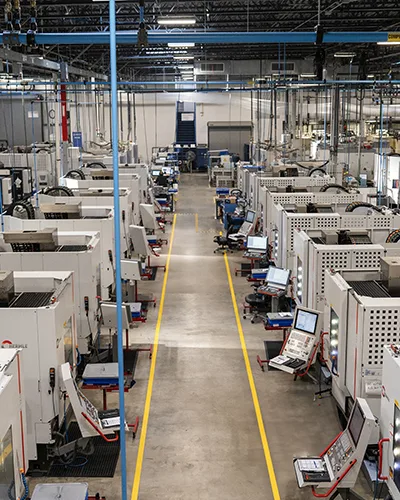
“We’re standardizing processes and selecting identical machining centers across business units to quickly reallocate capacity as needed, even if it sometimes means using machines in less-than-optimal ways.”
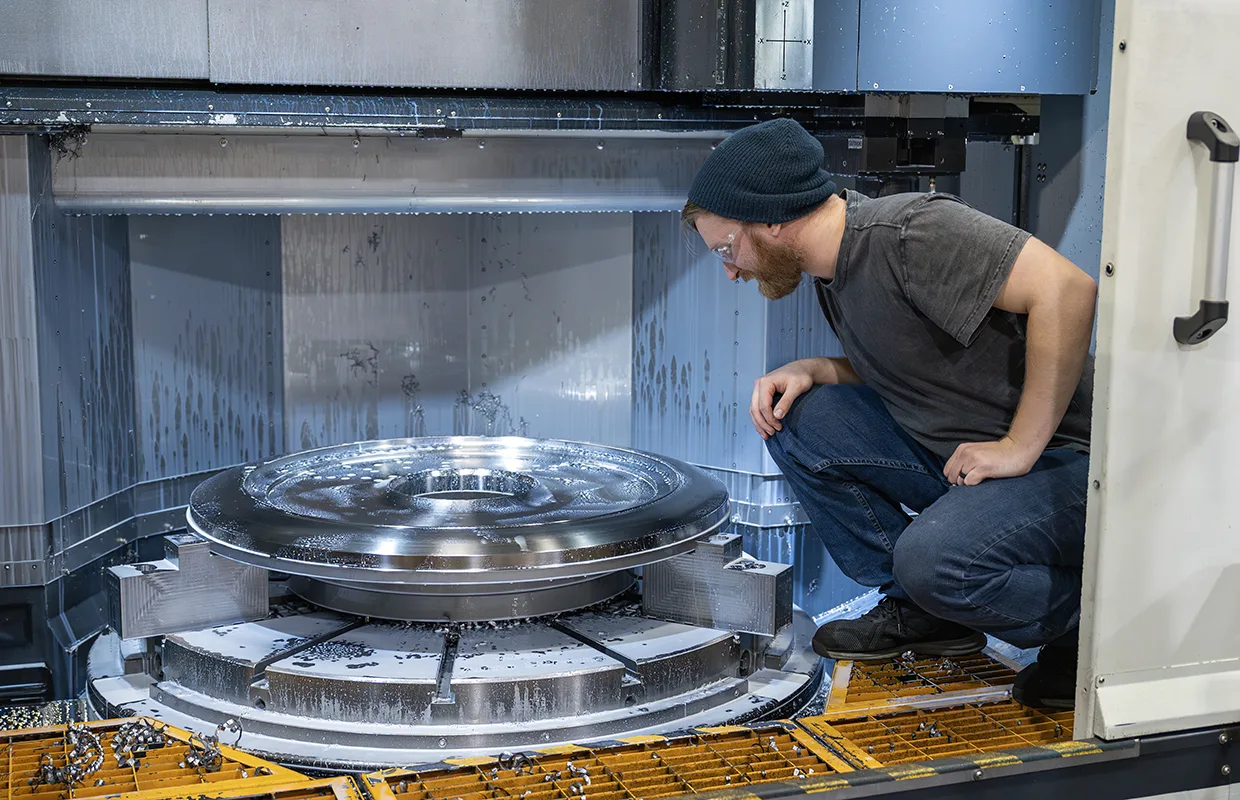
Establishing itself in 5-axis milling, electrochemical machining, and airfoil metrology, TURBOCAM continues to explore innovations in these areas. However, the industry has seen little improvement in these processes over the past seven years.
To maintain a competitive edge, TURBOCAM is enhancing its turning and grinding capabilities, which are crucial for ensuring smooth part integration at the assembly level.
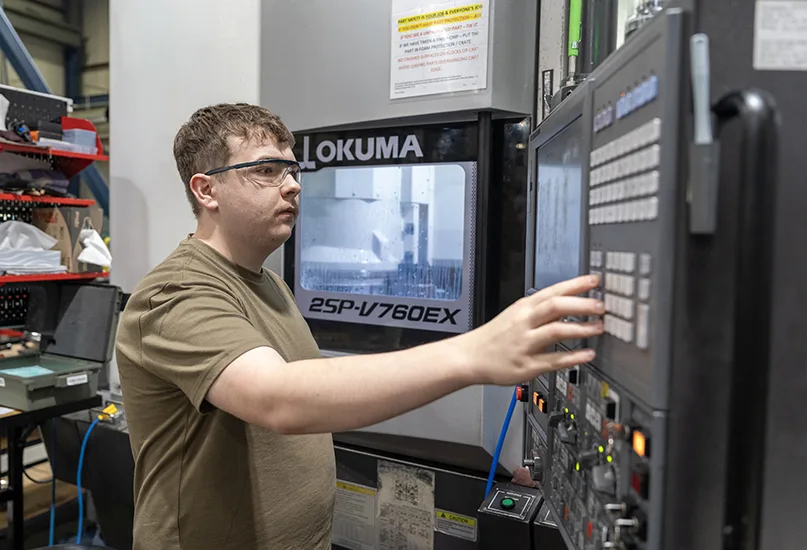
“With a shortage of skilled lathe and grind machinists in the US, we’re shifting toward processes that enable operators with basic technical skills to manage multiple machines and produce complex components efficiently.
“We also focus on cutting tool technologies and leveraging our in-house manufacturing capabilities to reduce this key driver of variable cost. By iterating on carbide grade, coatings, and geometry available within the public domain, we aim to minimize consumables usage, especially in nickel or titanium-based aerospace alloys,” Noronha emphasizes.
Getting the cutting science right is essential to TURBOCAM’s competitiveness at scale. While AI can provide initial insights, it cannot replace thorough trial-and-error in real applications.
“We’re expanding into challenging materials and shapes this year, with a limited 5-axis milling offering for ceramic workpieces. We’re also seeking partners to explore machining ceramic matrix composites – our technology excels with delicate features like those on blades and vanes,” he enlightens.
“Additionally, we’re introducing multi-axis electrochemical machining for non-line-of-sight passages in metal, and our goal is to tackle ‘impossible to machine’ components, unlocking material and geometry combinations that could lead to more efficient engine designs.”
TURBOCAM is also exploring the potential of supercritical carbon dioxide (CO2) to transform turbomachinery sectors, including geothermal energy, cooling systems, micro-nuclear reactors, and energy storage, partnering with design companies to bring this technology to market.
CULTIVATING A COMPANY CULTURE
A cooperative mentality shapes TURBOCAM’s company culture and operations, creating financial wealth for its employees.
“We foster a culture of stewardship where employees feel like owners and can make decisions independently. This enables a flatter structure, allowing us to react quickly to changes without rigid approvals,” explains Noronha.
“Our approach allows us to make multi-million-dollar decisions in real-time, focusing on learning from outcomes. We prioritize employee well-being by promoting a supportive work environment, valuing voluntary overtime, and maintaining extra inventory to reduce stress.”
TURBOCAM aims to create financial wealth for employees through competitive pay and benefits while minimizing the risk of job loss.
Customer commitments take priority, with investments in R&D and infrastructure made before allocating surplus budget to compensation and benefits. Notably, the owning family comes last, which would be unacceptable in most company structures.
There is a performance bonus of 10–12.5 percent for all employees as long as the company is meeting modest targets.
“We consistently increase total compensation above inflation for our staff by leveraging business capital and employee skills, instead of burdening customers with large price hikes.”
Despite being located outside traditional hubs, TURBOCAM focuses on workforce development by providing foundational training at its New Hampshire center for operators, inspectors, and engineers.
The company’s site in India, meanwhile, offers a year-long leadership training program for developing leaders, resulting in nearly 50 graduates who now serve as managers and supervisors.
“Our efforts have resulted in positive outcomes, with over 100 engineers joining from college, advancing their responsibilities, and many machinists progressing from operators to developing complex production processes.
“We retain talent through strong culture, competitive compensation, and skills development. We incorporate digital learning and on-the-job training with apprentice-style tracks in machine maintenance, machining, and inspection,” Noronha details.
OPTIMIZING OPERATIONS AND EXPANDING CAPABILITIES
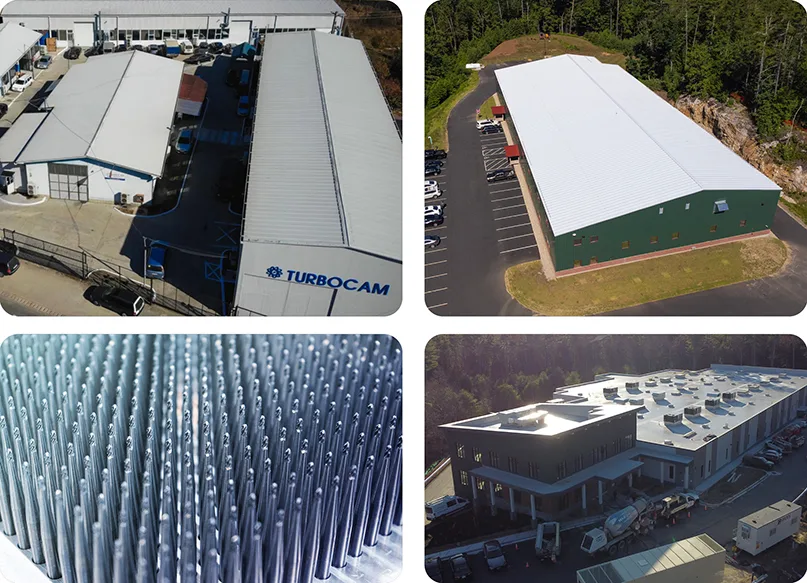
TURBOCAM’s new 75,000-square-foot (sqft) rocketry facility offers a range of specialized products and services, reflecting the sector’s advancing capabilities.
Additionally, the increased HVACR output in data centers has had a notable impact on both production levels and market demand.
“Our new rocketry facility will support two to three long-term OEM partners who are committed to using us instead of establishing their own production lines. These customers, from the rocketry and aero-engine sectors, are willing to pay a premium for a reliable supply of critical components,” informs Noronha.
The need for this facility arose as surging data center demand quickly consumed the company’s excess capacity.
“Our business supplying power generation and back-up has been our fastest-growing segment in the last three years, closely followed by HVACR.”
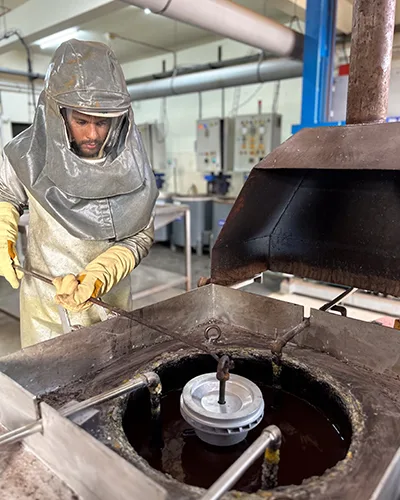
Another strategic move for the company is the recent transition to dip brazing in-house in India, as every HVACR compressor it produces is a brazed assembly.
The cost and quality of brazing in the US are challenging – labor is a major cost driver, and air freight costs are minimal compared to the savings from labor.
The US brazing supply chain is often tied to cost-insensitive military contracts, making it less competitive globally for commercial products.
“This year, we’re completing industry certifications to expand our capabilities and rapidly grow our HVACR market share.
“We’re focused on meeting customer delivery commitments, achieving eight percent global top-line growth, maintaining flat variable costs against inflation, and pursuing fiscal deleveraging goals to protect stakeholders.
“We aim to grow by partnering with customers to address their total supply challenges. Additionally, we have goals for improving employee experience, growth, and retention in place, though quantifying these targets is still in progress,” Noronha closes optimistically.
This company profile was produced by the editorial team at Manufacturing Outlook, a publication within the Outlook Publishing global network of B2B industry magazines.
Outlook Publishing showcases organisations and leadership teams shaping sectors including manufacturing, mining, construction, healthcare, supply chains, food production, and sustainability.
Manufacturing Outlook explores the companies, technologies, and leaders transforming the global manufacturing sector.