



Jan Diekmann, Head of Business Development and Manufacturing at Ericsson Enterprise Wireless Solutions, explores how private 5G is transforming the factory floor by empowering workers with real-time connectivity, intelligent technologies, and collaborative digital tools that are redefining the future of manufacturing.
Modern manufacturing has evolved into one of the most technologically advanced and human-centric industries to build a career in.
Today’s leading factories are increasingly defined by intelligent automation, real-time data, immersive technologies, and digitally connected operations that are transforming how people work.
But a critical talent shortage in the industry is already impacting productivity, innovation, and the long-term competitiveness of its businesses.
In the UK, 42 percent of the country’s 49,000 manufacturing vacancies are classified as skill-shortage roles.
Yet the challenge facing manufacturers is not simply attracting more workers. It is demonstrating that, despite the factory floor being associated with manual processes, the reality is far from outdated.
Rather than replacing workers, digital technologies are enabling employees to make faster decisions and collaborate more effectively, allowing them to take greater control over increasingly complex environments.
Private 5G is integral to this transformation. Its superior connectivity supports workers, machines, and applications more reliably across the production environment, even in challenging radio conditions.
Seamless mobility ensures workers’ devices remain stable and connected as they move around sites, whilst delivering the appropriate quality of service for different applications on a single network. This allows everything from critical industrial systems to workforce communications to be supported.
As such, the enablement of Industry 4.0 matters because the future competitiveness of manufacturing depends not only on improving operational efficiencies, but on creating workplaces that appeal to a new generation of digitally skilled talent.
Manufacturers should demonstrate that industrial careers offer the same opportunities for innovation, creativity, and skill development as other technology-driven sectors.
RESHAPING THE WORK EXPERIENCE
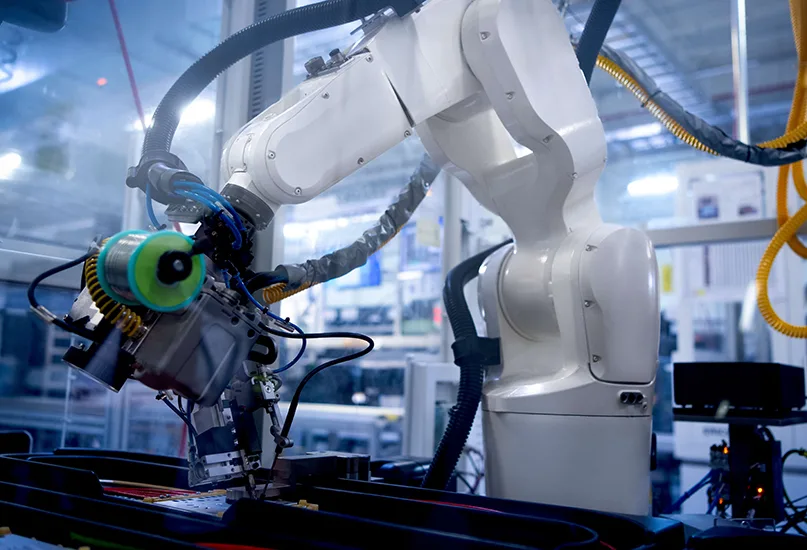
Digital transformation is changing the face of manufacturing. Connected technologies are reducing operational friction, improving access to expertise, and enabling employees at every experience level to contribute more confidently and effectively.
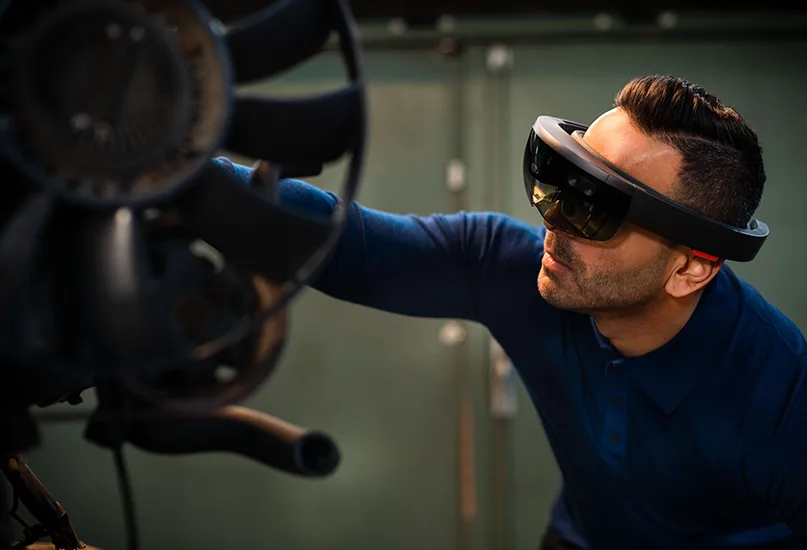
At Ericsson’s smart manufacturing facility in Estonia, for example, augmented reality (AR)-guided workflows are used to overlay step-by-step visual instructions directly onto physical equipment.
This approach reduces time spent navigating manuals and can cut troubleshooting time by up to 50 percent, allowing employees to perform complex tasks with greater accuracy and confidence.
There’s also greater demand for making informed operational decisions in real time to improve productivity, but also give people greater ownership over outcomes.
Connected sensors and digital dashboards provide workers that immediate visibility into production performance, so they can see how their actions influence quality, efficiency, and machine health, helping to create more engaging and collaborative working environments.
Safety measures are also being improved. Connected systems can monitor environmental conditions such as air quality, temperature, and noise levels, whilst wearable devices track worker well-being and ergonomic risk.
These insights enable proactive interventions that reduce the likelihood of injury whilst supporting safer collaboration between humans and machines.
For example, Audi has tested robotic systems that can automatically halt when a worker enters a designated zone.
Together, these capabilities fundamentally reshape the worker experience, enabling employees to focus on higher-value tasks, and develop new skills within a safer, more responsive environment.
UNLEASHING SMART MANUFACTURING
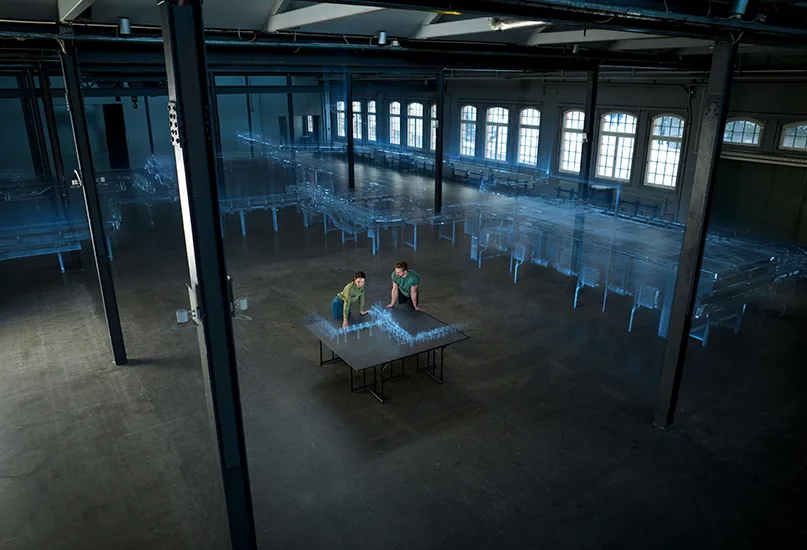
As factory floors become more digitally advanced, workers are empowered by staying connected to information, expertise, and operational systems.
Traditional wired infrastructure and fragmented wireless networks have limitations that disrupt workflows and slow decision-making.
Private 5G is changing this dynamic by creating highly reliable and secure connectivity across complex industrial environments. For workers, this means being able to move seamlessly and maintain uninterrupted access to the tools and insights needed to make informed decisions in real time.
These technologies don’t remove humans from manufacturing environments but place them more firmly in control.
By removing connectivity barriers, manufacturers can create more flexible, collaborative workplaces where employees are empowered to respond and solve problems faster and work more safely alongside advanced automated systems.
“As workers tap into real-time insights, collaborate more seamlessly and safely, and adapt their ways of working, private 5G creates environments where human expertise is amplified by intelligent technologies rather than replaced by them”
Jan Diekmann, Head of Business Development and Manufacturing at Ericsson Enterprise Wireless Solutions
EQUIPPING THE WORKFORCE FOR THE FUTURE
As Industry 4.0 accelerates, the role of workers will increasingly shift from operating isolated systems to supervising intelligent, highly connected environments.
In next-generation factories, industrial artificial intelligence (AI), together with large language models or small language models, will directly provide guidance and advice to workers.
Workers will be empowered to make faster strategic decisions, adapt processes dynamically, and collaborate across locations using live operational data and immersive digital tools.
However, these systems are only as good as the data that feeds it. The information from internet of things (IoT) devices, machines, and workers themselves needs to be easily shared and processed by reliable connectivity infrastructure.
Training and skills development are also evolving rapidly and positively shifting how manufacturing careers are perceived.
Virtual reality simulations already allow workers to practise complex procedures in controlled environments, accelerating learning whilst reducing future risk.
At the same time, high-resolution video and AR tools enable on-site teams to collaborate with remote specialists in real time, ensuring expertise can be accessed whenever and wherever it is needed.
BUILDING THE FOUNDATIONS OF SMART FACTORIES
Private 5G represents far more than keeping machinery and devices connected. It is redefining the relationship between people and technology across the manufacturing sector.
As workers tap into real-time insights, collaborate more seamlessly and safely, and adapt their ways of working, private 5G creates environments where human expertise is amplified by intelligent technologies rather than replaced by them.
As modernisation efforts continue, investment in advanced connectivity will allow manufacturers not only to improve productivity and resilience, but to attract and retain the next generation of industrial talent.
Transforming the manufacturing talent equation comes down to redefining the industrial work experience with more empowerment, reliable connectivity, and digital collaboration.
This article was contributed by a guest author and published by the editorial team at Manufacturing Outlook, part of the Outlook Publishing global network of B2B industry magazines.
Outlook Publishing features leadership insights, industry perspectives, and company stories from organisations shaping sectors including manufacturing, mining, construction, healthcare, supply chains, food production, and sustainability.
Manufacturing Outlook explores the companies, technologies, and leaders driving progress across the global manufacturing industry.