



Digital Matter helps businesses connect, protect, and derive more value from their assets. Loïc Barancourt, CEO, discusses how manufacturers can leverage new technologies to improve visibility across manufacturing plants and supply chains, and the importance of human insight as Industry 5.0 moves ever closer.
LONG-LIFE ASSET TRACKING
As the dawn of Industry 5.0 shifts away from overreliance on machinery and returns to focusing on people, manufacturers are increasingly using the Internet of Things (IoT) to elevate human decision-making by turning machine data into trusted, actionable insights.
Over the last decade, Industry 4.0 has focused on automating processes to ensure a strong return on investment (ROI) and increase efficiencies.
When dealing with complex systems and supply chains, however, the decision-making process often involves a plethora of subtleties and nuances that can only be made sense of by humans with a deep understanding of the industry and its complexities.
“The supply chain leader is at the heart of Industry 5.0 – subject matter experts with amplified capacity and bandwidth who have the most insight and can therefore make better decisions,” opens Loïc Barancourt, CEO of Digital Matter, a leading global developer and manufacturer of IoT hardware solutions.
Ultimately, the systems invented during Industry 4.0 should now be used to facilitate and augment access to enhanced insights, so better decisions can be made as the industry advances towards Industry 5.0.
DEPLOY ONCE
Capable of determining whether IoT deployments succeed or are abandoned, battery life, device design, and connectivity strategy are becoming increasingly important for supply chain leaders seeking reliable, end-to-end visibility across operations.
“When you consider a manufacturing business operating at scale, you’ve got a large supply chain with lots of moving parts,” Barancourt exemplifies.
He points out the importance of maintaining full visibility of the assets moving through the supply chain – from supplier through to manufacturer, distributor, and end user.
As such, tracking returnable transport packaging (RTP) used throughout these operations has become an important aspect of maintaining a transparent and efficient supply chain, enabling full visibility, resilience, and security.
“If a container, rack, or any specialised RTP doesn’t return in time, it can cause production to stop, which is why tracking is critical,” Barancourt emphasises.
The use of IoT inside manufacturing plants is also on the up, improving visibility within manufacturing processes.
“In instances such as these, manufacturers need a tracking device that is robust, long-lasting, and can send regular volumes of data over multi-year periods,” he outlines.
As such, Digital Matter’s ‘deploy once’ approach focuses on engineering ultra-rugged IoT trackers that function reliably for their entire service life – often spanning up to a decade – without requiring maintenance or battery changes.
The company also recognises that whilst connectivity can influence battery performance, the greater challenge in global supply chains is network availability, which varies significantly by region.
To address this, its devices are designed to intelligently determine their location and connect to the most appropriate available network, helping maintain consistent visibility across diverse geographies without compromising efficiency.
“It’s a delicate art and fine balance to strike, but something we’ve mastered here at Digital Matter,” Barancourt prides.

“The supply chain leader is at the heart of Industry 5.0 – subject matter experts with amplified capacity and bandwidth who have the most insight and can therefore make better decisions”
Loïc Barancourt, CEO, Digital Matter
THE REAL ROI
As supply chain visibility gaps beyond the factory floor continue to impact production readiness, resilience, and decision-making, returnable assets across upstream and downstream operations are becoming more frequently lost, damaged, or delayed.
Large-scale original equipment manufacturers (OEMs) in the automotive space, for example, are working hard to address these gaps as they require complete visibility to ensure parts are in transit, preventing potential issues before they escalate.
“If your supplier doesn’t have enough RTP to move goods, you can anticipate this and manage your asset fleet with visibility, which leads to better, more well-informed decisions being made,” Barancourt explains.
As such, with optimised visibility, manufacturers can make their fleets work harder and smarter.
In this way, the deployment of IoT trackers supporting systems to manage RTP is at the core of ROI when it comes to utilising assets advantageously to guarantee a smooth supply chain.
“The real value comes from improved asset utilisation – that’s where the real ROI is,” he adds.
“It’s a delicate art and fine balance to strike, but something we’ve mastered here at Digital Matter”
Loïc Barancourt, CEO, Digital Matter
DETAILS MATTER
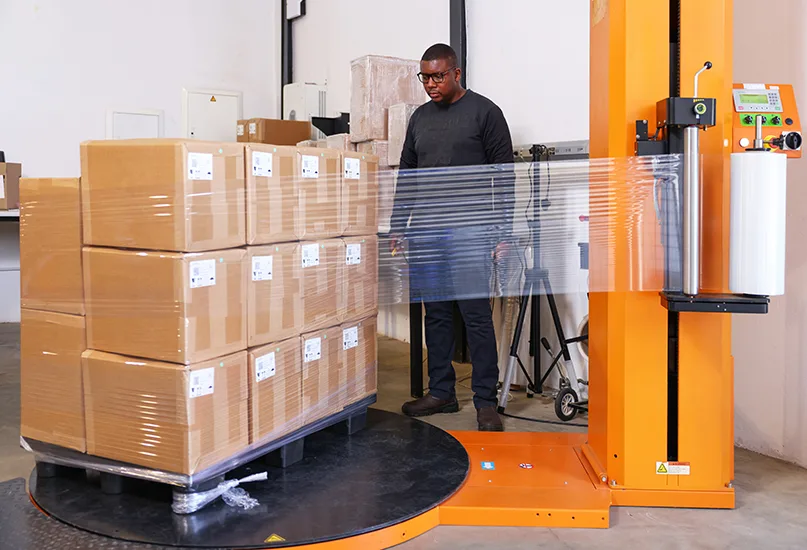
Digital Matter is helping industrial teams deploy low-power IoT in ways that truly make sense in live production environments, where performance expectations are high and failure can be costly.
In the world of battery-powered devices, the margin for error is slim. Small design miscalculations can have disproportionate consequences once devices are deployed at scale, often surfacing as significantly shorter battery life than anticipated.
For customers building long-term visibility strategies, those missteps can quickly undermine the business case.
“Mistakes can cause the battery to drain two, three, or four times faster than it should,” Barancourt sets out.
“If battery life drops from six years to six months, that’s a major issue.”
This means a digital control tower that a supply chain leader has built for end-to-end visibility can suddenly lose effectiveness if hardware in the field underperforms.
Ensuring a trusted, predictable flow of data from distributed physical assets back into those systems is critical – and exactly what the company is designed to deliver.
Digital Matter’s attention to detail has enabled it to build a reputation as a global leader, with constant innovation delivering reliable solutions for customers looking to connect their assets.
In the year ahead, the company’s vision is to become the partner of choice for tracking and monitoring the assets that matter.
“We have 1,500 resellers around the world who trust us with their tracking and monitoring requirements,” Barancourt tells us.
As such, it is seeing strong demand from resellers serving manufacturing and supply chain customers, particularly when it comes to supply chain visibility – an area in which it has identified significant growth.
“We’re doubling down on innovation in this area, with new products including cold chain solutions and cellular-connected labels launching soon,” he reveals.
Looking to the future, Digital Matter also anticipates furnishing Industry 5.0 supply chain leaders with AI-enabled software solutions to make better decisions.
“We want to be the trusted provider of reliable physical data feeding into those AI-native operations,” he confidently concludes.
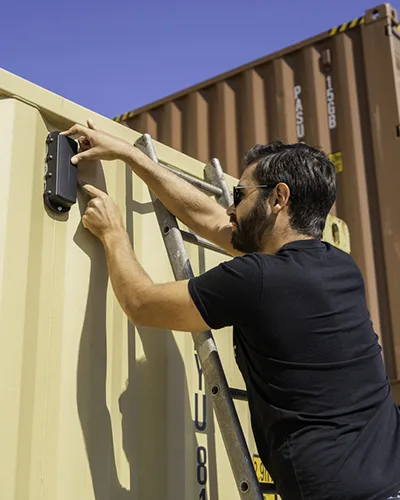

MANTA FUSION – IOT SENSOR PRODUCT OF THE YEAR
Earlier this year, Digital Matter’s Manta Fusion tracking device was selected as IoT Sensor Product of the Year at the 10th annual IoT Breakthrough Awards.
Recognised for its approach to delivering multi-technology location accuracy, ultra-long battery life, and advanced sensing, the tracker aligns with the company’s ‘deploy once’ approach thanks so its 10+ years of battery life.
Barancourt cites the sensor’s ability to achieve superior outdoor location accuracy whilst maintaining the same exceptional indoor performance, with the award serving as a recognition of the company’s commitment to delivering practical, long-life solutions that perform reliably in the field.
As such, Manta Fusion sets a new standard in IoT asset tracking and sensing.
This article was produced by the editorial team at Manufacturing Outlook and published as part of the Outlook Publishing global network of B2B industry magazines.
Outlook Publishing delivers industry insights, company stories, and sector coverage across manufacturing, mining, construction, healthcare, supply chains, food production, and sustainability.
Manufacturing Outlook provides ongoing coverage of organisations and developments shaping the global manufacturing industry.