



As the global leader in packaging automation, Packsize empowers businesses to transform their packaging processes while driving operational efficiency and reducing their environmental impact. We unbox the company’s right-sized approach with Brian Reinhart, Chief Revenue Officer.
SMART PACKAGING FOR A HEALTHY PLANET
The cardboard box has become one of the most visible symbols of global commerce.
Every day, millions of packages arrive on doorsteps across the US, each one representing a complex supply chain journey that begins in a warehouse somewhere in the world.
Yet, for decades, one critical step in that journey remained surprisingly inefficient – the box itself.
That inefficiency is exactly what Brian Reinhart, Chief Revenue Officer, and the Packsize team are working to change.
Reinhart is helping to lead a shift in how businesses think about packaging, moving away from standardized boxes and excess filler materials toward intelligent, automated systems that create the right sized box for every shipment.
In an era defined by e-commerce growth, rising transportation costs, labor shortages, and increasing sustainability expectations, Reinhart believes packaging can no longer be treated as an afterthought in the fulfillment process.
“For a long time, packaging in distribution centers was treated as a commodity step at the very end of the fulfillment process. Companies invested heavily in optimizing picking, robotics, and shipping networks, but the box itself was often an afterthought. Yet, packaging sits right at the intersection of cost, sustainability, labor, and the customer experience,” Reinhart opens.
“That realization is what drew me into the space. When you start looking closely at packaging operations, you see enormous inefficiencies: oversized boxes, wasted corrugate, excess filler material, higher shipping costs, underutilization of labor, and unnecessary transportation emissions.”
Now, packaging is becoming a strategic lever for improving efficiency across the entire supply chain.
“At Packsize, that’s exactly the challenge we focus on. Our goal is to transform packaging from a static commodity into a dynamic, intelligent system that adapts to every order,” explains Reinhart.
“Being at the forefront of an industry transformation like that is incredibly exciting.”
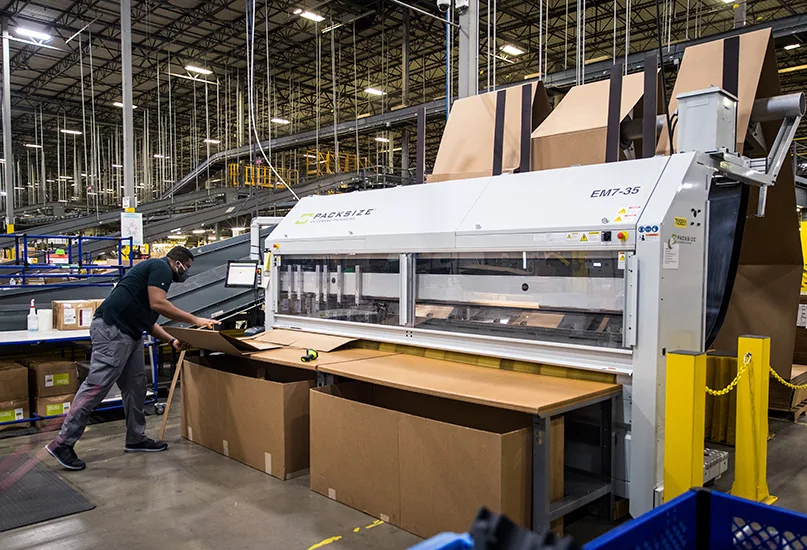
THE PERFECT FIT
Packaging has a surprisingly large impact on the overall efficiency of the supply chain.
Small improvements at the packaging stage can ripple through the entire logistics network – from warehouse productivity to transportation efficiency to the customer’s unboxing experience.
As companies continue to modernize their operations, packaging will increasingly be recognized as an area where technology and innovation can deliver meaningful improvements.
“The box may be the last thing a company touches before shipping a product, but it is the first thing a customer touches when receiving a product, and it has the power to influence everything that happens before and after,” explains Reinhart.
Packsize was founded on a simple but powerful idea – every product deserves a box that fits perfectly.
“Instead of stocking dozens of pre-made box sizes, our systems create the exact box needed for each order in real time,” he informs.
The company provides a broad range of automated packaging solutions for some of the world’s largest retailers, manufacturers, and third-party logistics providers.
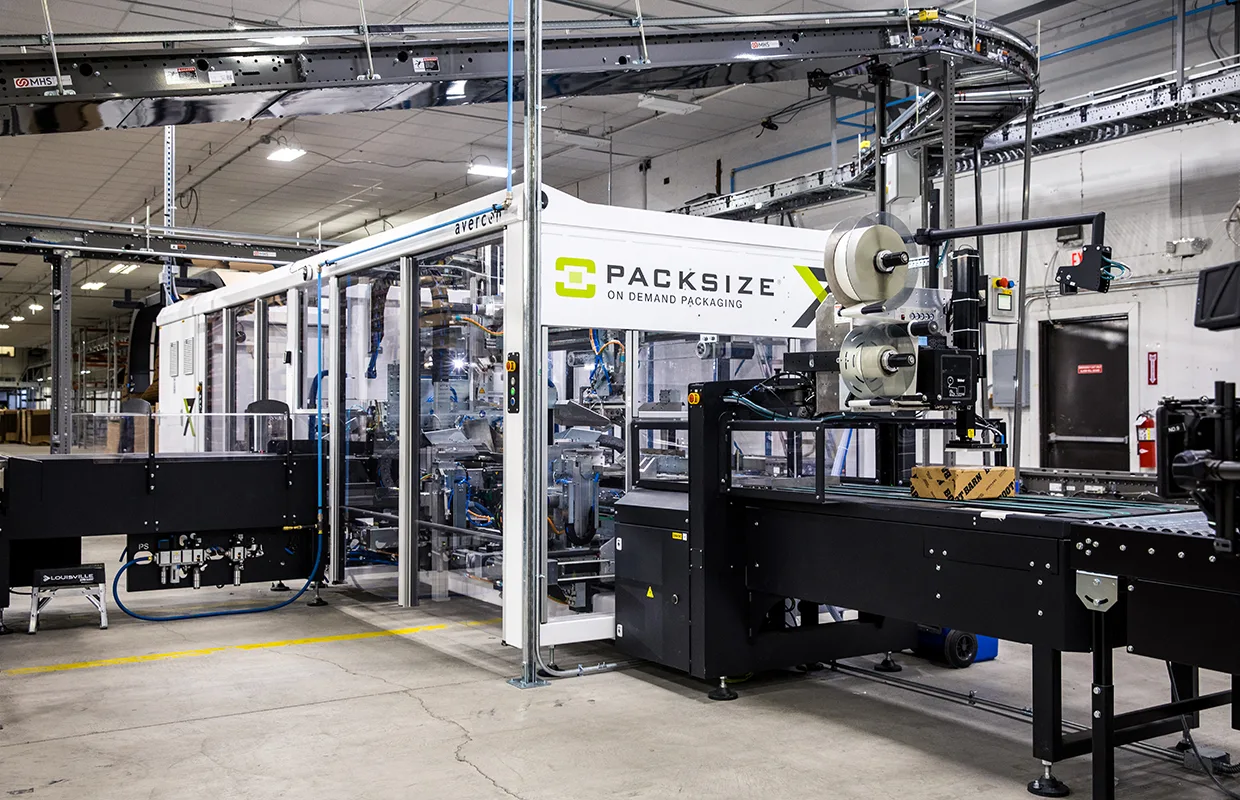
Its technology integrates directly into fulfillment operations and can scale from smaller pack stations to highly automated packaging lines capable of handling high-volume e-commerce environments.
Operating globally with a presence across North America and Europe, Packsize serves over 3,000 customer facilities.
The team includes engineers, supply chain specialists, software developers, and operations experts who work together to help customers rethink packaging as part of a broader operational strategy.
“What makes Packsize unique is that we’re not just delivering machines – we provide an integrated solution that combines automation, software, packaging design, and corrugate supply to optimize how packaging functions within the fulfillment process,” Reinhart highlights.
PACKAGING AS A SYSTEM
Whereas traditional packaging solutions often only focus on one element of the process, Packsize looks at the entire workflow, from the moment an order is picked to the moment it leaves the facility.
“We approach packaging as a system, not just a piece of equipment,” affirms Reinhart.
“Our systems dynamically determine the optimal box size, create it on demand, and integrate directly into the picking or packing process.”
This approach delivers benefits across several dimensions, such as reducing material usage, lowering shipping costs, improving labor efficiency, increasing throughput, and enhancing the customer experience.
Another differentiator is the depth of Packsize’s technology platform, as the company combines advanced machinery, intelligent software, and a global corrugate supply network to create solutions that are both scalable and highly adaptable.
“We provide technology to support oversized items, operations electing to pick directly into the box with automated lidding and closing systems, or operations that would prefer to package last, and we’re the only packaging provider in the world that can say that,” Reinhart acclaims.
Most importantly, Packsize has developed deep expertise after years working with large operations to understand the realities of modern logistics.
That experience allows it to design packaging systems that solve real operational challenges rather than theoretical ones.
“Packaging isn’t just a box anymore – it’s becoming a data-driven system inside the fulfillment operation. Packsize not only understands that, but also knows how to maximize its value,” outlines Reinhart.
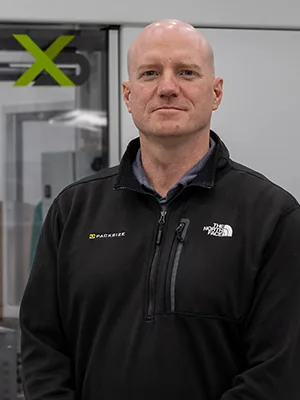
“Packaging is moving from being a back-of-house function to becoming a strategic lever in supply chain performance. For years, companies optimized every part of the warehouse except the box – that’s starting to change”
Brian Reinhart, Chief Revenue Officer, Packsize
RIGHT-SIZED APPROACH
Sustainability has always been a central part of Packsize’s mission and, interestingly, often goes hand in hand with operational efficiency.
“When you reduce excess packaging, you’re not just helping the environment – you’re also reducing material costs, shipping expenses, and transportation emissions,” Reinhart sets out.
“In other words, doing the right thing environmentally often turns out to be the right thing economically as well.”
One of the most visible examples of this is the reduction of void fill and unnecessary packaging material.
When a company ships a product in a box that is much larger than it needs to be, that extra space often requires plastic fillers or additional packing materials.
Right-sizing – creating packaging that fits the product as closely as possible – eliminates much of that waste.
“Packaging has historically relied on a limited number of standard box sizes, which meant products were often shipped in boxes that were significantly larger than necessary,” Reinhart tells us.
“Right-sizing changes that approach. Our systems analyze the dimensions of each product and each order to produce a custom box in real time.”
Packsize can do this in several different ways; if the operation has stock-keeping unit (SKU) data available, it can pre-size the box based on that data.
If, however, the data is unavailable, the system can perform a 3D scan of the products or order on the fly and build the box in real time.
This ability to remove data hygiene as a barrier to entry for right-sizing has been key to adoption across the marketplace.
“The key for us is making the process simple. Businesses are more likely to adopt a technology that minimizes disruption and provides its value without headaches,” emphasizes Reinhart.
“Ease of installation, system performance, uptime, and throughput are all metrics we commit to as part of our partnerships. We understand that packaging is critical to an operation, and our commitment is a baseline requirement for any level of embrace.
“Right-sizing isn’t just about reducing waste – it’s about building smarter supply chains,” he states.
“The broader vision is simple: a future where packaging is no longer wasteful, inefficient, or static, but instead dynamic, automated, and optimized for every shipment”
Brian Reinhart, Chief Revenue Officer, Packsize
SPARCK ACQUISITION
Packsize now has the full suite of high-volume, right-sized-on-demand packaging technology having acquired Sparck Technologies (Sparck) last year.
Sparck has built an exceptional reputation in the industry for highly automated packaging systems designed for high-volume fulfillment environments.
“Their continuously variable packaging (CVP) technology complemented our existing solutions extremely well,” Reinhart notes.
“We evaluated numerous technologies and companies for potential acquisition and, after exploring Sparck’s CVP Impack and CVP Everest technologies, it became apparent they were best-in-class.”
The acquisition represents an important step in Packsize’s long-term growth strategy, strengthens its global footprint, and accelerates its ability to innovate across the automated packaging space.
“Sparck has a lot of exciting R&D initiatives and new products in the pipeline that we’ve continued to develop and are excited to bring to market in the coming months and years,” shares Reinhart.
With a combined offering of both box-first and box-last solutions, and low and high-automation technology, the combination of Packsize and Sparck creates the most comprehensive portfolio of automated packaging technologies.
Customers today have very different operational needs depending on their order profiles, fulfillment volumes, and facility designs.
By bringing these capabilities together, Packsize is able to support a much broader range of packaging scenarios.
“It also allows us to continue investing in innovation. Automation is evolving rapidly, and the integration of packaging technology with warehouse software, robotics, and data analytics will play an increasingly important role in the future of fulfillment,” Reinhart insights.
“Together, our organizations are well-positioned to lead that next phase of development.”
For Packsize’s customers and partners, it shows the company’s commitment to their long-term success and growth.
“Our goal is to be their one-stop shop for automated packaging, but we understand that to become that level of partner, we must continue to build our portfolio of technologies and internal expertise and maintain and expand our position as the industry leader,” he acknowledges.
THREE FOCUS AREAS
The first of Packsize’s three focus areas moving forward is to continue helping customers rethink packaging as a strategic part of their supply chain operations, rather than a final step in the fulfillment process.
“I still believe we as an industry have a lot of work to do here. Every time I get an overpacked box at my front door, I consider it a failure on my part. We won’t rest until every organization sees right-sizing as a baseline for packaging,” Reinhart asserts.
Second, Packsize is continuing to invest in automation and intelligent packaging solutions that integrate more deeply with warehouse technologies and order management systems.
“Ease of integration and ease of use are critical. Once the market is aware of the technology and the benefits, we must ensure the barrier to entry is as low as possible,” he elaborates.
Lastly, the company is focused on executing successfully upon the adoption of right-sized packaging as companies pursue both operational efficiency and sustainability goals.
“We continue to see adoption rise and substantial year-on-year growth, but that will only continue if we have success in the field.
“The broader vision is simple: a future where packaging is no longer wasteful, inefficient, or static, but instead dynamic, automated, and optimized for every shipment,” concludes Reinhart passionately.
This company profile was produced by the editorial team at Manufacturing Outlook, a publication within the Outlook Publishing global network of B2B industry magazines.
Outlook Publishing showcases organisations and leadership teams shaping sectors including manufacturing, mining, construction, healthcare, supply chains, food production, and sustainability.
Manufacturing Outlook explores the companies, technologies, and leaders transforming the global manufacturing sector.