

Jack Smith
One of the biggest challenges manufacturers face is that sustainability initiatives often require investment at a time when energy, labour, and material costs are already under pressure. The reality is that sustainability has to make commercial sense as well as environmental sense. At JSJ UK, we’ve focused on making sustainability part of our day-to-day decision-making, rather than treating it as a separate initiative. In many cases, the most sustainable solution is simply doing things right first time and avoiding unnecessary rework or waste. Reducing waste, improving material utilisation, and investing in more efficient machinery and digital processes can all help lower energy consumption whilst improving productivity and maintaining quality. We’re also seeing greater interest from clients who want to understand where materials come from and how products are manufactured. Responsible sourcing is becoming increasingly important, which is why maintaining FSC certification across our timber supply chain remains a key part of our approach. For manufacturers, the most successful sustainability initiatives are often those that improve efficiency and operational performance at the same time. When sustainability is embedded into everyday decision-making, it is much more likely to deliver lasting benefits for both the business and the environment. Founder and Managing Director, JSJ UK About Jack Smith Jack Smith is Founder and Managing Director of JSJ UK, an award-winning bespoke joinery and manufacturing specialist. Operating from the Preston workshop in Lancashire, JSJ UK manufactures high-quality solutions for the commercial, hospitality, leisure, education, and healthcare sectors across the UK and beyond.
Jo Gibert
Balancing sustainability with rising energy costs isn’t a trade-off, but a discipline. Energy is a major operational cost for manufacturers, so using it more efficiently is one of the most practical ways to support sustainability and competitiveness. The starting point is reducing the energy required per unit of output through smarter processes, modern infrastructure, and better visibility across operations. But efficiency alone isn’t enough without data. Organisations need consistent, comparable information on energy use to identify waste, spot inefficiencies, and track progress over time. Technologies such as IoT sensors can provide the real-time visibility needed to turn energy consumption into actionable insights. Without measurement, cost control and sustainability strategies fall short. Longer term, increasing the use of renewable energy will be key to cutting emissions and reducing exposure to volatile energy prices. However, the right approach will depend on site conditions, grid access, and local energy availability. That means the solution will look different across facilities and markets, but the principle remains the same: measure accurately, improve efficiency first, and then integrate cleaner energy where it makes commercial sense. Manufacturers should treat energy performance as a core operational priority, using it to strengthen resilience, control costs, and support long-term competitiveness. Technology Director, GSMA About Jo Gibert Jo Gilbert is a Technical Director at the GSMA, leading Connected Manufacturing that brings together operators, enterprises, and the ecosystem. With over 20 years in telecommunications (telecoms), she supports organisations in applying technologies like 5G, IoT, AI and non-public networks to drive industrial innovation and resilience.
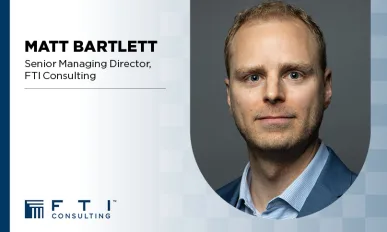
Matt Bartlett
Sustainability and energy cost management are not competing priorities for energy-intensive industries – they’re complementary when approached with the right sequencing: reduce, source, stabilise. Near-term opportunity lies in demand-side efficiency – process optimisation, heat recovery, and intelligent energy scheduling deliver immediate return on investment (ROI), reduce emissions, and require no significant capital commitment. Policy incentives and flexible financing structures can further accelerate the transition for manufacturers managing capital constraints. Longer-term strategy is where competitive advantage is gained. Shifting to renewable sourcing is fundamentally a hedge – against fossil fuel volatility, tightening carbon regulations, and growing competitive exposure in global markets. As renewable infrastructure costs continue their structural decline, early movers build durable cost advantages that compound. This is not an environmental concession; it’s a strategic investment in long-term margin resilience. The cumulative effect is energy cost stability – reducing a historically unpredictable cost variable and redirecting management focus towards growth and operational excellence. The transition demands honest planning. Capital constraints and regional energy dynamics are real, and sequencing investment to match financial capacity is essential. The direction is clear: manufacturers that act with discipline today will be structurally better positioned – financially, competitively, and against their sustainability commitments – for the decade ahead. Senior Managing Director, FTI Consulting About Matt Bartlett Matt Bartlett specialises in delivering end-to-end strategic transformation to complex supply networks. He brings more than a decade of executive leadership and advisory experience across supply chain functions, with experience spanning the consumer goods, industrials and chemicals, life sciences, medical devices, high technology, and communications…